
Tag: #selfdiscovery

  • Lost in Thought Somewhere Between Nairobi and Kilifi

    Lost in Thought Somewhere Between Nairobi and Kilifi

    I’m in the shower, getting ready to travel — but my mind is already miles ahead. The water is hot, yet I barely feel it. My thoughts have packed their bags long before I have. There’s always that strange excitement before a trip — a mix of restlessness, curiosity, and a little anxiety that makes you forget what you were even doing.

    By the time I’m done, I’m rushing around the house like a man in a movie montage — checking if I’ve switched off the gas, trying to remember where I kept my earphones, convincing myself that leaving five minutes late is not the end of the world. Traveling has a way of showing you how forgetful you can be.

    Outside, Nairobi’s morning air has that bite of cool energy. I can feel the city waking up — matatus honking, someone already arguing with a boda rider, and a few early birds jogging like they have a medal to win. There’s something about this city that makes you feel alive, even when you’re leaving it.

    At the train station, people move like a school of fish — everyone in their own direction but somehow in sync. Families, lovers, businesspeople, backpackers — all waiting for that metallic beast that will carry us across the land.

    Once I’m seated, I notice something new. The seats! They’ve changed. Gone are the old face-to-face arrangements where you had to pretend to like small talk. Now they’re like airplane seats — forward-facing, quiet, civilized. I silently thank whoever made that decision. Sometimes you just want to stare out the window and reflect — not be forced into a conversation about politics with a stranger who spits sunflower seeds.

    As the train hums out of Nairobi, I settle in. A little girl next to me drifts to sleep and ends up with her head on my lap. Her mother, seated behind us, gives me that grateful smile of tired parents. I just nod — what can you do? You can’t wake a child in deep peace.

    Somewhere near Athi River, the train fills with laughter. A group of passengers has cracked open a bottle of something strong — their voices growing louder with each toast. Another group is sharing mandazis, someone’s playing rhumba from a Bluetooth speaker. Trains are a moving universe — little pockets of life, joy, and chaos all running on the same track.

    At Voi, the lady sitting next to me stands up to alight. We’ve been talking about business — she’s from my community, and where I come from, business is not just work, it’s identity. She’s full of energy, ideas, and that entrepreneurial fire. When she leaves, the train feels a bit quieter, almost too quiet.

    The landscape outside turns dry, wide, and beautiful. My mind drifts again — to life, to time, to all the things we chase and forget to enjoy. Traveling alone does that to you; it gives your thoughts space to wander.

    We arrive in Kilifi close to midnight. The air hits me like a warm hug — thick, salty, and familiar. My friends are waiting at the station, loud and laughing. The coast has its own rhythm — slower, softer, more forgiving.

    The next morning, I wake up early, tie my laces, and head out. I run through the sisal plantation, connect to the beach, stretch in the cold water, and breathe in that coastal calm. Sometimes, that’s all you need — to move, to feel, to exist in the moment.

    Now, I’m back in Nairobi again. The city is buzzing, people rushing, and life moving fast — but part of me is still there, in Kilifi, with the ocean breeze and slow mornings.

    Funny thing about journeys — they don’t just move you from place to place; they move you from version to version of yourself.
  • The Rhythm of Kilifi: A Morning, A Mindset, A Way of Life

    The Rhythm of Kilifi: A Morning, A Mindset, A Way of Life

    The Rhythm of Kilifi: A Morning, A Mindset, A Way of Life

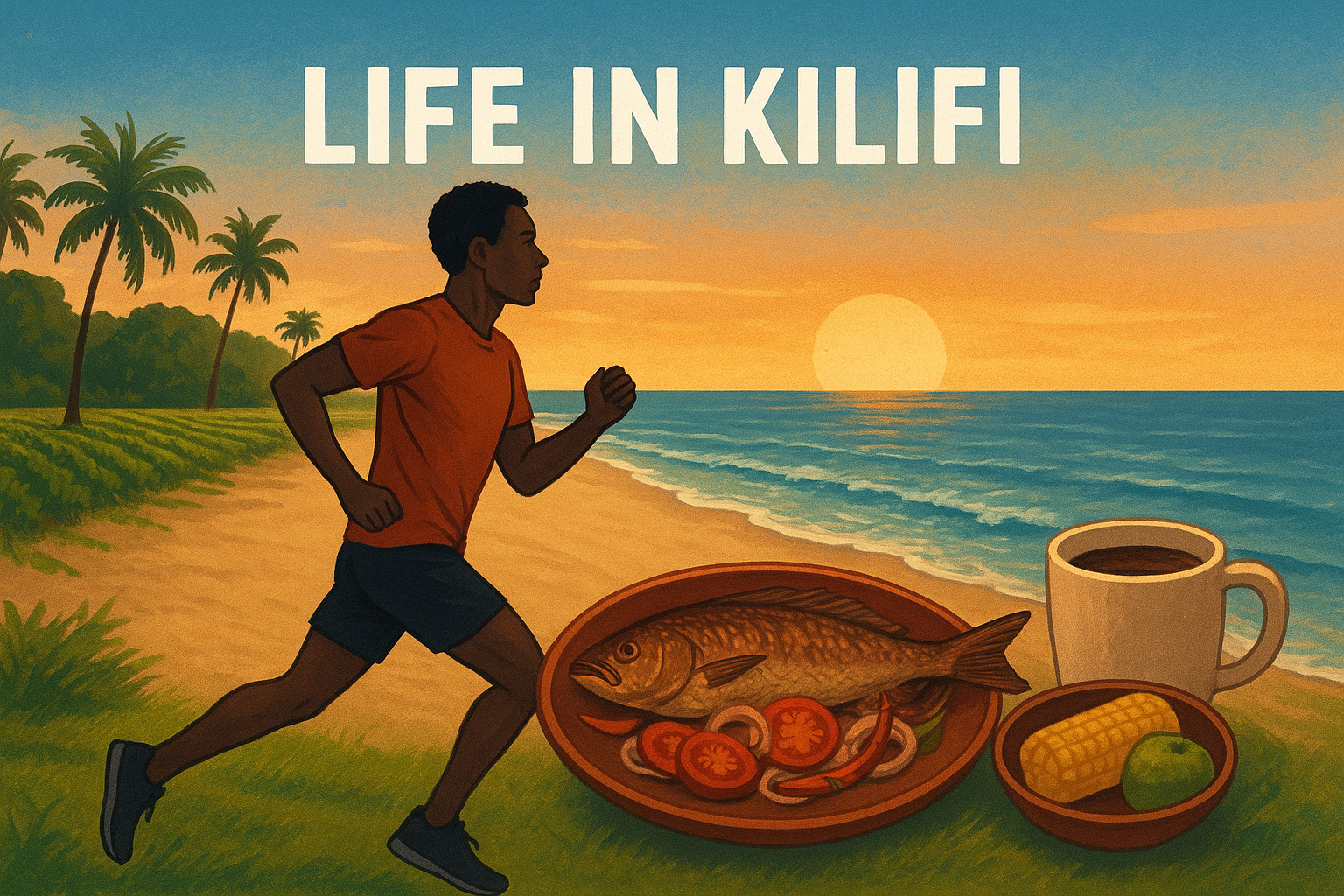
    When the sun is still a whisper behind the horizon, I’m already up — lacing my shoes as the world around me sleeps. The air in Kilifi has its own kind of silence, not empty but alive. It smells of the sea, the soil, and something ancient. At 5 a.m., I start my run through the Vipingo sisal plantation, where the cool breeze brushes against my face and the only sounds are my breath and the rustle of leaves.

    Sometimes I run, sometimes I walk, sometimes I just listen. When I reach the beach, I step into the cold water, stretch, and let the waves hit my legs. That’s my therapy — the kind that doesn’t need a gym membership. I drop down for abs, squats, push-ups, whatever my body calls for that day. I can go for hours like that, moving between silence and motion, between strength and peace.

    I train alone most of the time — a lone ranger, as people like to say. But once in a while, friends from Nairobi join me, and the energy shifts. We laugh, challenge each other, run side by side until our legs burn. During the holidays, others join too — locals, students, even visitors — all drawn by the same thing: the ocean, the open space, and the freedom to move.

    When I’m done, I go back home to refuel the coastal way. My breakfast is simple: peanuts, boiled raw maize, an apple, and a cup of hot coffee mixed with ginger and lemon. That’s it. Natural, clean, and full of energy. It’s what my body needs — not too heavy, not too fancy, just real food. The peanuts give me protein, the maize keeps me fueled, the coffee sharpens my mind, and the ginger with lemon keeps everything balanced.

    And then, there’s the food that defines where I live — fish.
    We cook it the traditional way here. Fresh fish boiled with raw sour mangoes, tomatoes, onions, and pepper — no water added, just those ingredients simmering in their own juices. The taste is deep, earthy, and full of life. You can feel the ocean in every bite. Most times, I eat it with ugali. Some days I add cabbage — I like it because it keeps me lean, and I train every day. It’s a lifestyle, not a routine.

    Even the small rituals matter — like a haircut. Every week, I visit my trusted barber. But sometimes, I admit, I cheat on him with someone else. (It happens when I’m in Nairobi — old habits die hard.) Here in Kilifi, they shave differently. They know how to use a razor blade, and when you find someone skilled, that cut is perfect. I keep my hair short now — number two on top, number one on the sides, clean and flat because my hair is a little curly.

    Then comes that moment of truth — the spirit.
    We don’t use fancy aftershaves here. Just pure spirit. When it hits your skin, it burns like fire for three seconds, and then you feel alive. I always close my eyes, breathe through the sting, and when it passes, I feel fresh — like a reset.

    People tell me I don’t look my age. Maybe it’s the lifestyle — the early mornings, the clean food, the peace of mind. Sure, white hair has started to show, but I’ll never dye it. I embrace it. Every strand tells a story.

    Living here has taught me something simple: you don’t need much to feel alive.
    Just a good run, honest food, a sharp razor, and peace in your heart.

    That’s Kilifi.
    That’s me.

  • Take a Slow Breath

    Take a Slow Breath

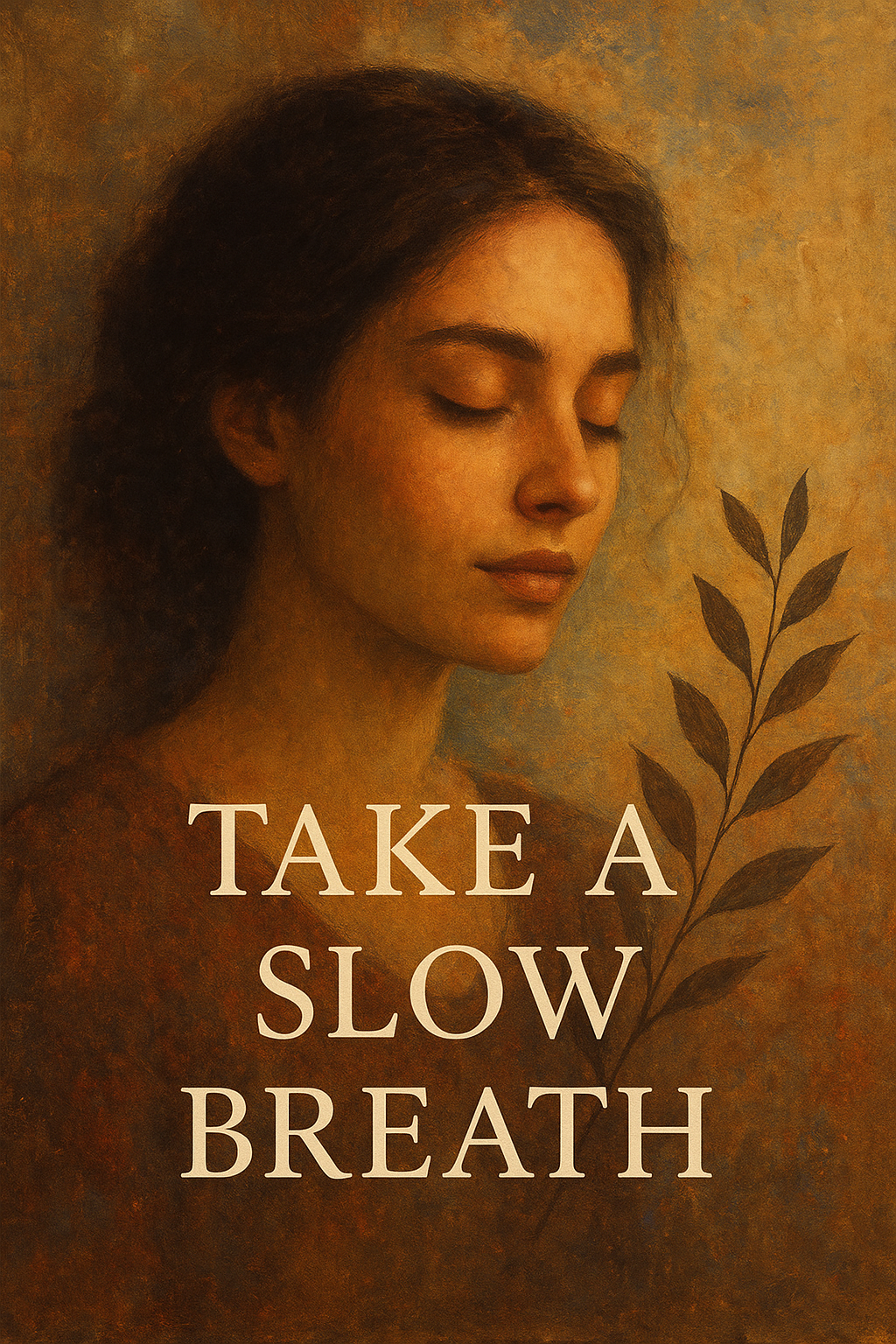
    Take a slow breath.

    Not because someone told you to calm down, but because you deserve a moment that belongs only to you.

    The world moves too fast. It demands answers, reactions, proof of strength — even when your heart is still learning how to keep up. You’ve been running on empty, carrying stories that no one sees, pretending to be fine when you’re barely holding together.

    So pause. Just for a heartbeat.
    Let your shoulders drop. Let the noise fade, even if only for a few seconds. The truth is — you don’t have to fight every moment of your life. You don’t always need to be productive, brave, or certain.

    Take a slow breath, and feel how much stillness you’ve been missing. Feel how your chest rises and falls — the simple rhythm that’s kept you alive through every storm, every silence, every time you thought you couldn’t go on but somehow did.

    There is no deadline for healing. No finish line for peace. The world will keep spinning whether you rush or not, so take your time. Breathe until your thoughts stop shouting. Breathe until you remember that you are not your mistakes, not your pain, not your pressure to be more.

    Every slow breath is a quiet rebellion — a reminder that you are human, not a machine. That you are allowed to rest, to feel, to rebuild at your own pace.

    Take a slow breath, and let that be enough for now.
    Because sometimes, survival isn’t loud or heroic — it’s gentle, patient, and silent. It’s in the way you keep showing up, breath after breath, becoming softer without breaking.

    Take a slow breath.
    You’re still here — and that means something.

  • From Isolation to Illumination: Finding Peace in Solitude

    Feeling lonely or disconnected? Learn how to turn isolation into a source of strength and self-discovery. Here’s how to find peace in solitude and embrace being alone.

    Keywords: finding peace in solitude, benefits of solitude, how to be alone, mindfulness and loneliness, self-discovery in solitude


    When Silence Feels Heavy

    There are moments when being alone feels like a weight.
    The house is quiet, the world seems distant, and you can hear every tick of the clock. It’s easy to mistake that silence for emptiness — to believe that solitude means something is missing.

    But solitude isn’t the same as loneliness.
    Loneliness is the ache of absence.
    Solitude is the art of presence — with yourself.


    The Shift from Isolation to Solitude

    At first, solitude can feel uncomfortable. When the noise fades, your thoughts get louder. You start noticing emotions you’ve pushed aside — sadness, fear, even boredom.

    That’s okay. It’s part of the process.

    True solitude isn’t about escaping others; it’s about meeting yourself. It’s the quiet space where your mind slows down, your emotions surface, and your inner voice finally has room to speak.

    And in that space, something beautiful happens: isolation turns into illumination.


    Why Solitude Matters

    Psychologists and spiritual teachers agree — spending time alone has powerful benefits.
    It helps you:

    • Recharge emotionally. Constant connection drains energy. Solitude restores it.
    • Understand yourself better. Without outside noise, you can hear your real thoughts and values.
    • Spark creativity. Great ideas often come when your mind has room to wander.
    • Build inner peace. Learning to enjoy your own company makes you less dependent on others for happiness.

    In short, solitude helps you come home to yourself.


    How to Find Peace in Solitude

    1. Start small. Take short breaks from social media, or spend an hour doing something quietly alone.
    2. Make it meaningful. Use solitude for something that feeds your spirit — reading, journaling, walking, or meditating.
    3. Listen inwardly. Ask yourself how you’re really doing — and answer honestly.
    4. Let go of guilt. Wanting time alone doesn’t make you selfish; it makes you human.

    Over time, you’ll notice solitude shift from something you tolerate to something you treasure.


    Turning Light Back Outward

    The peace you find in solitude doesn’t stay there.
    When you learn to be with yourself fully, you also show up better for others — calmer, clearer, more grounded.
    Solitude fills your inner cup so that connection becomes an act of giving, not grasping.


    Final Thought

    Solitude isn’t a punishment. It’s a path — a gentle one that leads back to your true self.

    When you stop running from being alone, you stop running from yourself.
    And in that quiet space, you’ll find what you’ve been searching for all along: peace, clarity, and light that doesn’t depend on anyone else.

  • Why We Fear Being Alone — but Crave It Anyway

    We fear being alone, yet we crave it. Explore the psychology behind our love-hate relationship with solitude — and learn how to make peace with being by yourself.


    The Paradox of Solitude

    You cancel plans just to stay home — then spend the evening scrolling and feeling guilty for being alone.
    You dream of a weekend getaway by yourself — but when the silence hits, it feels uncomfortable.

    Sound familiar?
    That’s the human paradox: we fear being alone, yet deep down, we crave it.

    This tug-of-war between solitude and connection isn’t just emotional — it’s biological and psychological.


    Why We Fear Being Alone

    For most of human history, being alone meant danger. We survived by belonging to tribes and groups. The fear of isolation is wired deep into our brains — the same circuits that light up for physical pain also react to loneliness.

    When we’re alone, that ancient alarm system goes off. It whispers:

    “You’re unsafe. You don’t belong.”

    So, we fill the silence with noise — social media, messages, or background TV. Anything to avoid the feeling of disconnection.

    But here’s the twist: what once kept us alive can now keep us stuck — always seeking company, rarely finding peace.


    Why We Crave Solitude

    Despite the fear, something inside us longs for quiet. That’s because solitude isn’t the same as loneliness.
    Loneliness is emptiness.
    Solitude is presence — presence with yourself.

    In solitude, your mind finally stops reacting and starts reflecting. You reconnect with your thoughts, your creativity, your intuition. Studies show that spending time alone can actually improve emotional regulation, focus, and empathy.

    In short: being alone helps you remember who you are when no one’s watching.


    The Real Problem Isn’t Solitude — It’s Avoidance

    Many people think they fear being alone, but what they actually fear is meeting their unfiltered self.
    The silence of solitude acts like a mirror — reflecting everything you’ve been avoiding: your doubts, desires, regrets, and dreams.

    But here’s the beauty: once you face those reflections, they lose their power. What was once uncomfortable becomes freeing.


    How to Make Peace With Being Alone

    1. Start small. Spend 10–15 minutes each day without your phone or distractions.
    2. Do something just for you. A walk, journaling, music — anything that reconnects you with yourself.
    3. Reframe solitude. Don’t see it as “no one wants to be with me.” See it as “I’m choosing to be with myself.”
    4. Observe, don’t judge. When loneliness arises, notice it gently instead of running from it.

    With time, you’ll find that solitude isn’t a punishment — it’s an invitation.


    Final Thought

    Being alone doesn’t mean being lonely. It means giving yourself space to breathe, think, and grow.

    We fear solitude because it strips away the noise — but that’s exactly where truth lives.
    And when you learn to be comfortable in your own company, you’ll never feel truly alone again.

Verified by MonsterInsights