Tag: #SelfDiscipline

  • Why Your 20s Don’t Define You — But Your Discipline Does

    Why Your 20s Don’t Define You — But Your Discipline Does

    Society loves to glamorize the idea that your 20s are the most important decade of your life — the years where you must figure everything out, become successful, fall in love, establish your identity, and somehow build the foundation for the next 50 years. It’s a beautiful story, but also a dangerous one. Because the truth is simple: your 20s don’t define you — your discipline does.

    We live in a world where timelines are treated like rules. Graduate at 22. Have a career by 25. Be financially stable by 27. Get married by 30. Yet when you look closely at reality, life is far less predictable — and far more forgiving. The people who become truly great rarely follow a perfect timeline. They follow a consistent work ethic.

    Your 20s are not a finish line. They’re not even the race. They’re the warm-up, the stage where you make mistakes, test ideas, discover strengths, and fail forward into who you’re becoming. You’re not behind — you’re building. And what you’re building has nothing to do with age and everything to do with discipline, vision, and persistence.

    1. Your 20s Are an Experiment, Not a Final Draft

    The biggest lie about your 20s is that they’re supposed to make sense. In reality, most people in their 20s feel lost, confused, and overwhelmed — even the ones who pretend to have everything together. Behind the aesthetic Instagram photos and confident captions, you’ll find uncertainty, self-doubt, and trial-and-error.

    And that’s okay.
    Your 20s are designed for exploration. These are the years where you:

    • try things that don’t work
    • discover what you don’t want
    • experience discomfort that shapes you
    • make mistakes that teach you
    • outgrow people you once thought were permanent

    What matters is not whether you have life figured out. What matters is that you keep moving — that you keep learning, adjusting, waking up, and trying again. Growth requires motion, not perfection.

    2. Discipline Outweighs Talent, Luck, and Age

    Talent is beautiful, but unreliable.
    Luck is unpredictable.
    Age is irrelevant.

    Discipline, on the other hand, is always there — waiting to be used, waiting to transform your life.

    A person with discipline will surpass a naturally gifted person who lacks consistency. A person with discipline will create opportunities even when luck refuses to show up. A person with discipline will build a future even when their age seems “behind the timeline.”

    Discipline is the great equalizer.
    It turns dreams into goals.
    It turns goals into plans.
    It turns plans into results.

    3. Success Happens When You Stay With Boring Things Long Enough

    People love the idea of success — the lifestyle, the confidence, the rewards. What they don’t love is the process: repetition, routine, patience, and the daily grind no one else sees.

    Success is built in silence.
    Mastery is formed in repetition.
    Breakthroughs are born from boring consistency.

    Your 20s don’t define you because your results aren’t supposed to show yet. You’re planting seeds. And seeds don’t care about age — they care about consistency, watering, sunlight, and time.

    4. Reinvention Is Always Possible — And Often Necessary

    If you think you need to stick to the first version of yourself forever, you’re mistaken. Reinvention is one of the most powerful advantages you have in life — and it doesn’t expire once you leave your 20s.

    You can change careers at 30.
    Start a business at 35.
    Find your true passion at 40.
    Begin your healing journey at 50.
    Become your best self at 60.

    There is no deadline on transformation.
    There is no age limit on ambition.
    There is no expiration date on dreams.

    But what determines whether reinvention succeeds or fails is discipline — your willingness to start again, learn again, and work again.

    5. Your 20s Teach You Something More Important Than Success

    They teach you self-awareness — who you are, who you are not, and who you want to become.

    This decade isn’t about “making it.”
    It’s about understanding yourself well enough that when success finally appears, you’re ready for it.

    Your 20s give you clarity, humility, direction, resilience, and identity. But these lessons only have value when paired with consistent effort. Clarity without discipline is just daydreaming.

    6. When You Choose Discipline, You Choose Your Future

    The moment you decide to be consistent — even at a small scale — your life begins to shift. Discipline creates momentum. Momentum creates progress. Progress creates confidence. And confidence creates a new identity: someone who follows through.

    It doesn’t matter where you live, what job you have, who believes in you, or how uncertain your future feels. If you choose discipline, you choose growth. You choose evolution. You choose the future version of yourself who looks back and says:

    “I didn’t have everything figured out in my 20s.
    But I stayed consistent.
    And that changed everything.”

    Your 20s are not a verdict; they are a beginning. You are not behind. You are not late. You are not failing. You are becoming.

    What will define your life is not how quickly you “figure it out,” but how consistently you show up — with intention, hunger, and discipline.

    Your 20s don’t define you.
    Your habits do.
    Your consistency does.
    Your discipline does.
    And that’s the best news — because those are all things you control.
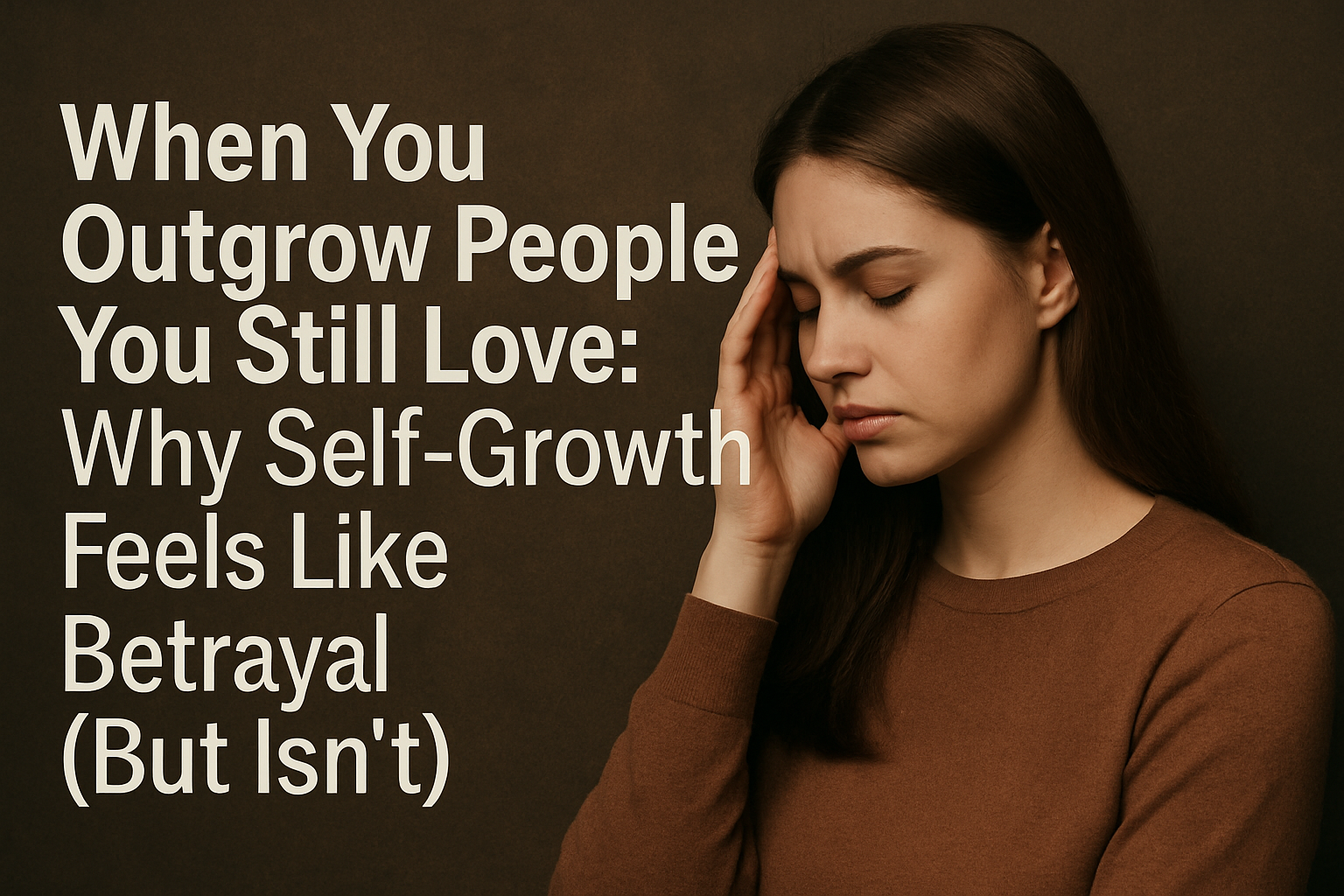
  • When You Outgrow People You Still Love: Why Self-Growth Feels Like Betrayal (But Isn’t)

    When You Outgrow People You Still Love: Why Self-Growth Feels Like Betrayal (But Isn’t)

    There’s a strange kind of pain nobody prepares you for — the pain of outgrowing people you still care about.
    It hits quietly, almost softly, like a whisper inside you saying:

    “This doesn’t feel like home anymore.”

    Not because the people changed.
    Not because you stopped loving them.
    But because you changed.

    You grew.
    Your mind expanded.
    Your spirit shifted.
    Your ambitions stretched into new territory.
    And suddenly the conversations, the habits, the environments that once felt comfortable… now feel too small.

    But here’s the hardest part:
    Loving people doesn’t always mean you’re meant to stay with them forever.


    The Guilt That No One Talks About

    When you outgrow someone, guilt becomes your shadow.

    You ask yourself:
    “Am I abandoning them?”
    “Am I becoming cold?”
    “Am I selfish for wanting more?”
    “Why do I feel distant from people I still love?”

    But growth feels like betrayal only when you don’t understand it.

    You’re not betraying anyone.
    You’re honoring the person you’re becoming.

    And sometimes the people you love aren’t meant to grow in the same direction — or at the same pace — as you.
    That doesn’t make them bad.
    It just makes you different now.


    Why Growth Changes Your Circle

    Self-expansion shifts your standards.
    Healing shifts your boundaries.
    Awareness shifts what you tolerate.

    Suddenly, you start noticing things you used to normalize:

    • Conversations that drain you
    • Friendships built only on convenience
    • People who love you but don’t understand you
    • Environments that hold you to your older, smaller self
    • Cycles you’re not willing to repeat anymore

    When you evolve internally, the world around you demands re-evaluation.

    And outgrowing people isn’t losing them —
    it’s losing the version of you that needed them.


    Not Everyone Can Go Where You’re Going

    Some people love the old version of you — the one who didn’t know better, didn’t want more, didn’t see further.

    Your growth challenges their comfort.
    Your ambition makes them uncomfortable.
    Your awareness confronts their denial.
    Your healing exposes their wounds.

    So they try to pull you back.
    Not out of malice — but out of fear.

    Because the moment you rise, your presence forces them to see their own stagnation.

    And not everyone is ready for that mirror.


    You Can Love People From a New Distance

    Growing apart doesn’t mean you wish them harm.
    It means you are no longer aligned.

    Some people were meant to walk with you only through certain chapters, not the whole story.

    You can:

    • Love them
    • Respect them
    • Treasure the memories
    • Pray for their good
    • Still choose a different path

    Everything doesn’t have to end with drama or bitterness.
    Sometimes the softest goodbye is simply moving differently.


    When You Finally Choose Yourself

    The moment you stop feeling guilty for your growth, everything shifts:

    • You speak more clearly
    • You set boundaries effortlessly
    • You seek alignment, not approval
    • You protect your peace more fiercely
    • You attract people who match your energy
    • You evolve into someone you barely recognize — in the best way

    Self-expansion isn’t selfish.
    Self-abandonment is.

    Choosing your growth is choosing your future.


    This Is What Growth Really Means

    Growth is not just changing your habits.
    It’s changing your identity, your environment, your relationships, and your future.

    Growth is:

    • Becoming someone you’re proud of
    • Becoming someone your younger self needed
    • Becoming someone your older self will thank
    • Becoming someone who no longer fits inside the small spaces you once lived in

    You were never meant to stay the same.
    And you were never meant to carry everyone with you.

    Some people are lessons.
    Some are blessings.
    Some are temporary companions.
    And some only make sense in your memory.

    But you — you are the constant.
    You are the one who must keep moving.


    Outgrowing Isn’t Cruel. Staying Small Is.

    At the end of the day, the people who truly love you won’t be threatened by your growth — they will rise with you or cheer you on.

    And the ones who fall away?

    Be grateful.
    Because their presence belonged to the version of you that no longer exists.

    You’re allowed to evolve.
    You’re allowed to want more.
    You’re allowed to become different.
    You’re allowed to outgrow even the people you love.

    This isn’t betrayal.
    This is becoming.

  • How to Become a Better Human Being Through Working Out

    How to Become a Better Human Being Through Working Out

    Working out isn’t just about having a strong body — it’s about becoming a stronger version of yourself. Exercise shapes your muscles, yes, but more importantly, it shapes your character, discipline, and mindset. When you commit to physical growth, you naturally evolve into a better human being.

    1. Working Out Builds Discipline

    Discipline is the foundation of self-improvement.
    When you wake up early, push through the tiredness, and show up for yourself, you build a habit of consistency. This discipline transfers into every area of your life — your work, your relationships, your goals. A disciplined person becomes reliable, focused, and unstoppable.

    2. It Teaches You to Overcome Resistance

    Every workout has a moment where you want to quit — and every time you push past that moment, you teach your mind resilience.
    The gym becomes a training ground for life.
    You face challenges, push through discomfort, and learn that you are stronger than your excuses. This mental toughness changes how you handle stress, setbacks, and difficult people.

    3. Exercise Improves Your Attitude and Energy

    A healthy body produces a healthy mind. Working out releases endorphins that boost your mood, reduce anger, and help you think clearly. You become calmer, happier, and more patient — the qualities that make someone great to be around.

    4. It Builds Confidence From the Inside Out

    Confidence doesn’t come from looking good — it comes from keeping promises to yourself.
    When you work out consistently, you feel proud of who you’re becoming. You move with purpose, speak with courage, and stop seeking validation. A confident person naturally inspires others.

    5. Working Out Teaches Humility

    When you start, you’re weak, slow, and unsure. And that’s powerful.
    The gym reminds you that improvement takes time. You learn to be patient with yourself and others. You learn that everyone is fighting their own battles. This humility makes you more compassionate and understanding.

    6. It Makes You a Better Role Model

    People notice consistency.
    Your family, friends, and even strangers see your commitment and get inspired. You show what discipline looks like. You set a standard. You become a living example that growth is possible.


    Final Thought

    Becoming a better human being isn’t about perfection — it’s about progress.
    Working out is one of the simplest and most powerful ways to evolve mentally, physically, and emotionally. Start where you are, move your body, stay consistent, and watch how your entire life transforms.

  • How to Manage Anger at Home If You Can’t Afford a Therapist

    How to Manage Anger at Home If You Can’t Afford a Therapist

    Anger is a natural emotion, but when it becomes overwhelming at home, it can strain relationships and disrupt your peace. Not everyone can afford therapy, yet there are effective strategies to manage anger without professional help. This guide offers practical steps to regain control, build emotional resilience, and foster a calmer home environment.

    1. Recognize Your Triggers

    The first step in managing anger is understanding what sparks it. Triggers can be stress from work, family conflicts, or even small daily annoyances. Keeping a journal of your emotions can help you identify patterns. When you know your triggers, you can prepare strategies to respond calmly rather than react impulsively.Learn more about emotional self-awareness here

    2. Practice Deep Breathing and Relaxation Techniques

    When anger arises, your body reacts with increased heart rate and tension. Simple deep breathing exercises can reduce these physical symptoms:

    • Inhale slowly through your nose for 4 seconds.
    • Hold for 4 seconds.
    • Exhale gently through your mouth for 6 seconds.
    • Repeat for 5–10 minutes.

    Additionally, try progressive muscle relaxation or guided meditation. Over time, these techniques train your mind and body to respond to anger with calmness. Mayo Clinic on stress management

    3. Communicate Assertively, Not Aggressively

    Anger often escalates when feelings are bottled up. Learn to express yourself without blaming others. Use “I feel” statements instead of “You always…” For example:

    • “I feel frustrated when dishes are left in the sink because it affects my focus.”
    • Avoid attacking language; focus on your emotions and needs.

    This encourages constructive dialogue rather than conflict, strengthening your relationships at home.

    4. Create an Anger Management Routine

    Consistency helps. Dedicate a few minutes each day to:

    • Journaling your emotions
    • Practicing mindfulness
    • Exercising or walking
    • Listening to calming music

    A structured routine reduces emotional buildup and provides a healthy outlet for frustration. Explore mindfulness exercises at home

    5. Engage in Physical Activity

    Exercise is a proven way to reduce anger and stress. Activities like running, yoga, or even brisk walking release endorphins, chemicals that improve mood and help you think clearly. Regular movement also improves sleep, which further reduces irritability.

    6. Practice Gratitude and Positive Thinking

    Shifting your focus from frustration to appreciation can change your emotional landscape. Each day, write down 3 things you are grateful for. Over time, gratitude rewires your brain to respond to challenges with patience rather than anger.

    7. Set Boundaries and Take Breaks

    Sometimes, the best way to prevent anger is to step away from triggering situations. Give yourself permission to:

    • Leave the room temporarily
    • Take a short walk
    • Practice a calming ritual

    Boundaries protect your emotional well-being and give you space to respond thoughtfully rather than react impulsively.


    Conclusion

    Managing anger at home without therapy is possible with self-awareness, consistent practice, and healthy coping strategies. Recognizing triggers, practicing relaxation techniques, communicating assertively, exercising, and embracing gratitude can transform your emotional responses. With patience and persistence, you can create a calmer, happier home environment.

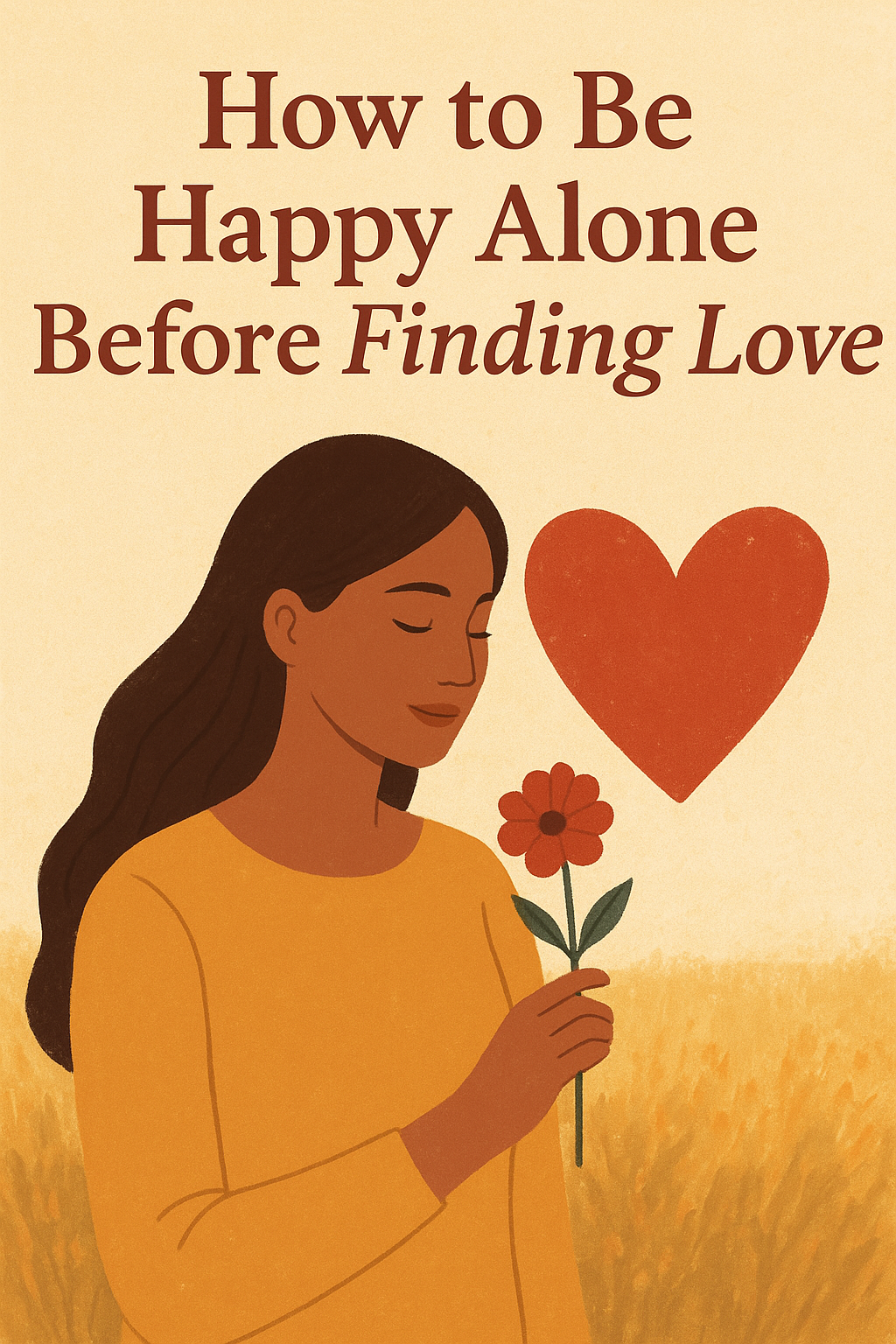
  • How to Be Happy Alone Before Finding Love

    How to Be Happy Alone Before Finding Love

    In a world that constantly tells us happiness begins with someone else, we often forget the quiet truth: the greatest love story begins within.
    Being alone is not a punishment — it’s preparation. It’s the sacred space where you learn who you are, what you need, and how to love yourself before asking anyone else to.

    If you’ve read The Happiness Experiment: 25 Stories That Will Change the Way You Live, you already know this: joy is an inside job. No person, no relationship, and no validation can complete what you haven’t first begun within yourself.

    Learning to be happy alone is not about isolation; it’s about liberation. It’s about becoming so full of your own light that when love comes, it adds to your brightness — not replaces it.


    1. Redefine What Alone Means

    Being alone doesn’t mean being lonely. It means being available — to yourself, your thoughts, your peace.
    Alone time is the soil where self-awareness grows. It’s where you can ask, Who am I when no one is watching? What do I truly want?

    As Psychology Today explains, solitude allows your mind to rest and your identity to strengthen. Without it, we risk losing ourselves in others.

    💡 Try this: Spend one hour a day without distractions — no phone, no music, no scrolling. Just you. Notice what rises when silence begins to speak.


    2. Make Friends with Yourself

    Before you seek love, become your own best friend. Treat yourself with the same care, patience, and curiosity you’d offer someone you love deeply.

    In How to Find and Keep Happiness in Your Relationship, we talked about kindness between partners — but it begins with the kindness you show yourself. Compliment yourself. Forgive your mistakes. Celebrate your small victories.

    🌷 Practice this: When negative self-talk appears, pause and ask, Would I say this to someone I love? If not, rewrite the sentence with compassion.


    3. Fill Your Life with Meaning

    Happiness alone is not about being alone — it’s about being alive.
    Create a life that excites you: read books that move you, build habits that heal you, and pursue passions that awaken you.

    The Greater Good Science Center at UC Berkeley notes that purpose-driven living improves emotional resilience and overall happiness. The more fulfilled you feel on your own, the less you’ll look for someone to fill the emptiness.

    🌻 Ask yourself: What lights me up? What makes me lose track of time? Start there.


    4. Learn the Language of Self-Compassion

    We often crave love because we long for someone to be gentle with us. But what if that gentleness began inside?
    Self-compassion means accepting your flaws, your past, and your imperfections without shame.

    Check out this reflection on gratitude and self-worth from The Happiness Experiment — it explores how learning to appreciate yourself can open new doors to inner peace.

    🌙 Tip: When you fail or fall short, replace judgment with curiosity. Ask, What is this moment trying to teach me?


    5. Build Emotional Independence

    The happiest relationships come from emotionally independent people — those who don’t need love to survive, but choose love to thrive.
    Emotional independence means you can find calm in solitude, soothe your own heart, and take responsibility for your happiness.

    As Mindful.org beautifully puts it, mindfulness teaches us to “sit with ourselves without needing to escape.” The more comfortable you are with your own company, the healthier your future love will be.

    🌼 Remember: When you no longer fear being alone, you attract love that feels like freedom — not rescue.


    6. Surround Yourself with Positive Energy

    You may be physically alone, but you’re never spiritually alone. Stay connected to uplifting people, creative communities, and inspiring spaces.
    Listen to positive podcasts, read uplifting books, join online discussions that promote growth.

    If you’re looking for more inspiration, visit The Happiness Experiment Series for stories that remind you how joy can be found in the smallest, simplest things.

    Daily ritual: Begin your morning with gratitude — list three things you love about your life as it is now.


    7. Become the Love You Seek

    The love you crave — the tenderness, respect, passion, and peace — all begin with you.
    Be the person you’d want to be with: honest, kind, forgiving, and full of wonder.

    When love finally arrives, it won’t be to complete you — it will be to complement the wholeness you’ve already built.

    As one chapter from The Happiness Experiment reminds us:

    “When you learn to love your own company, you stop chasing people who make you forget who you are.”


    Final Thought

    Learning to be happy alone isn’t about waiting for love — it’s about becoming it.
    When you fill your days with gratitude, purpose, and presence, you become magnetic. You attract love effortlessly — because love recognizes itself in you.

    So take walks alone. Dream big alone. Heal alone. Laugh alone.
    And know that you are already whole.

    Because happiness doesn’t start when you meet someone — it starts the moment you meet yourself.

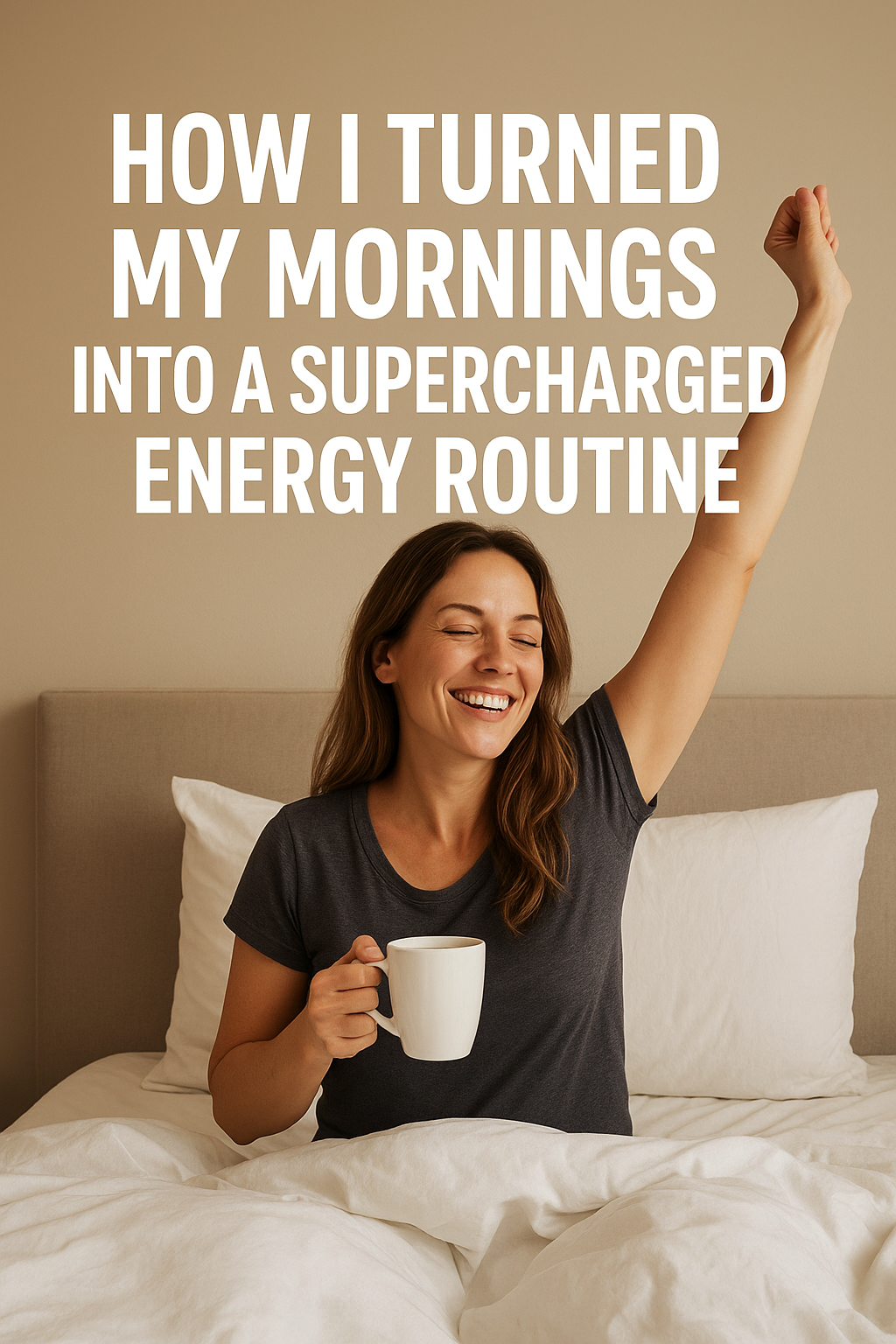
  • How I Turned My Mornings Into a Supercharged Energy Routine

    How I Turned My Mornings Into a Supercharged Energy Routine

    Mornings used to be my least favorite part of the day. Groggy eyes, a foggy mind, and the desperate chase for coffee to feel even slightly awake—it was a struggle. But lately, everything has changed. I feel free. I feel happy. And most importantly, I feel alive.

    The secret? A combination of small, intentional actions that boost both my body and mind. It’s not about doing more—it’s about doing the right things consistently. Here’s what my mornings look like now, and how they’ve transformed my life.


    Step 1: Wake Up and Energize the Body

    My morning starts with brushing my teeth and rinsing with salt water. It may sound unusual, but it’s a ritual that wakes up my senses instantly. The slight sting of saltwater clears my mind, my mouth feels fresh, and I feel awake in a way caffeine alone can’t achieve.

    Next, I drink raw ginger water. Ginger is a powerhouse—it awakens the body, improves circulation, and even boosts mood. Then comes my coffee. But unlike before, coffee now complements a body already energized, rather than being a desperate jolt to the system.

    In just a few minutes, my body feels alive, alert, and ready to move.


    Step 2: Feed the Mind

    After energizing my body, I move to my positive energy frequency meditation. Just 10–15 minutes is enough to shift my mindset for the entire day. I focus on positivity, gratitude, and setting intentions. I don’t chase results, I focus on feelings: peace, clarity, joy, and energy.

    This meditation has changed everything. I used to start my day reacting to emails, messages, and the chaos of life. Now, I start my day proactively, setting the tone before the world even opens its eyes.


    Step 3: Focus on What Matters

    I have dreams—big dreams. But I’ve learned they happen in their own time. Right now, I focus on the small, meaningful actions I can take: writing a book, blogging, working out, and taking care of myself.

    Focusing on these small things has an incredible effect. Each action, though minor alone, compounds over time. Writing a few paragraphs daily adds up to chapters. Daily workouts improve both body and mood. Blogging consistently builds a platform and sharpens my mind.

    The key is staying present and intentional. The big picture is important, but obsessing over it can create anxiety. By focusing on small, controllable actions, I feel grounded, productive, and content.


    Step 4: Movement and Mindfulness

    Somewhere in my morning routine, I incorporate movement. Whether it’s light stretching, a short walk, or a proper workout, it helps maintain energy, improves mood, and keeps my body in harmony with my mind.

    Movement is more than exercise—it’s a reset. It’s a way to release tension, refocus the mind, and maintain a flow of positive energy. Pair this with meditation, and your mind and body are in alignment.


    Step 5: Reflection and Gratitude

    Before diving fully into the day, I take a moment to reflect. A short journaling session, just 3–5 minutes, is enough to jot down insights, small wins, or things I’m grateful for. Gratitude doesn’t just feel good—it rewires the brain to notice positivity instead of dwelling on stress.

    This reflection, combined with intentional morning energy rituals, sets me up for a day full of clarity, focus, and purpose.


    Why This Routine Works

    This routine isn’t about following strict rules—it’s about creating habits that naturally boost energy and happiness. Here’s why it works:

    • Consistency compounds results: Daily small actions—writing, working out, meditating—add up over time.
    • Focus on controllable actions reduces stress: Instead of chasing results, I focus on actions I can control, which creates freedom and peace.
    • Alignment of mind and body creates energy: The combination of meditation, movement, and nourishing drinks primes my body and mind for peak performance.
    • Gratitude and reflection reinforce positivity: Daily acknowledgment of small wins keeps motivation high.

    Takeaway: Build Your Own Energy Routine

    You don’t need to wait for life to give you energy, happiness, or freedom. You can create it yourself, one intentional action at a time. Start with small rituals—things that wake your body, center your mind, and focus your attention.

    Over time, these small actions compound into a life that feels alive, free, and full of joy. Big dreams will come, but in the meantime, tending to the small, meaningful things creates a life that’s extraordinary today—not someday.

    Start small, stay consistent, and watch your energy, focus, and happiness transform your mornings—and your life.

  • The Most Powerful Motivation

    The Most Powerful Motivation

    The most powerful motivation doesn’t come from a speech,
    a quote,
    or a crowd cheering your name.
    It comes from silence —
    from the quiet realization that no one is coming to save you.

    It’s the moment you look at your reflection and know:
    this is it.
    This is the person who will build the life you dream of —
    or watch it fade away.

    Real motivation isn’t loud.
    It doesn’t roar.
    It whispers,
    again and again,
    “Keep going.”

    It’s not found in comfort,
    but in discomfort —
    in the days you’re tired, uncertain,
    and tempted to quit,
    but choose not to.

    Because deep down,
    you know that every step, no matter how small,
    is proof that you’re still fighting.

    The strongest fire isn’t the one others light for you —
    it’s the one you spark inside yourself,
    and keep alive when no one’s watching.

    So stop waiting for inspiration.
    Stop waiting for the perfect time.
    The truth is, it’s already you —
    you’ve always been the reason.
    You are the source.
    You are the spark.
    You are the most powerful motivation there is.

Verified by MonsterInsights