Tag: #mentalhealth

  • When You Outgrow People You Still Love: Why Self-Growth Feels Like Betrayal (But Isn’t)

    When You Outgrow People You Still Love: Why Self-Growth Feels Like Betrayal (But Isn’t)

    There’s a strange kind of pain nobody prepares you for — the pain of outgrowing people you still care about.
    It hits quietly, almost softly, like a whisper inside you saying:

    “This doesn’t feel like home anymore.”

    Not because the people changed.
    Not because you stopped loving them.
    But because you changed.

    You grew.
    Your mind expanded.
    Your spirit shifted.
    Your ambitions stretched into new territory.
    And suddenly the conversations, the habits, the environments that once felt comfortable… now feel too small.

    But here’s the hardest part:
    Loving people doesn’t always mean you’re meant to stay with them forever.


    The Guilt That No One Talks About

    When you outgrow someone, guilt becomes your shadow.

    You ask yourself:
    “Am I abandoning them?”
    “Am I becoming cold?”
    “Am I selfish for wanting more?”
    “Why do I feel distant from people I still love?”

    But growth feels like betrayal only when you don’t understand it.

    You’re not betraying anyone.
    You’re honoring the person you’re becoming.

    And sometimes the people you love aren’t meant to grow in the same direction — or at the same pace — as you.
    That doesn’t make them bad.
    It just makes you different now.


    Why Growth Changes Your Circle

    Self-expansion shifts your standards.
    Healing shifts your boundaries.
    Awareness shifts what you tolerate.

    Suddenly, you start noticing things you used to normalize:

    • Conversations that drain you
    • Friendships built only on convenience
    • People who love you but don’t understand you
    • Environments that hold you to your older, smaller self
    • Cycles you’re not willing to repeat anymore

    When you evolve internally, the world around you demands re-evaluation.

    And outgrowing people isn’t losing them —
    it’s losing the version of you that needed them.


    Not Everyone Can Go Where You’re Going

    Some people love the old version of you — the one who didn’t know better, didn’t want more, didn’t see further.

    Your growth challenges their comfort.
    Your ambition makes them uncomfortable.
    Your awareness confronts their denial.
    Your healing exposes their wounds.

    So they try to pull you back.
    Not out of malice — but out of fear.

    Because the moment you rise, your presence forces them to see their own stagnation.

    And not everyone is ready for that mirror.


    You Can Love People From a New Distance

    Growing apart doesn’t mean you wish them harm.
    It means you are no longer aligned.

    Some people were meant to walk with you only through certain chapters, not the whole story.

    You can:

    • Love them
    • Respect them
    • Treasure the memories
    • Pray for their good
    • Still choose a different path

    Everything doesn’t have to end with drama or bitterness.
    Sometimes the softest goodbye is simply moving differently.


    When You Finally Choose Yourself

    The moment you stop feeling guilty for your growth, everything shifts:

    • You speak more clearly
    • You set boundaries effortlessly
    • You seek alignment, not approval
    • You protect your peace more fiercely
    • You attract people who match your energy
    • You evolve into someone you barely recognize — in the best way

    Self-expansion isn’t selfish.
    Self-abandonment is.

    Choosing your growth is choosing your future.


    This Is What Growth Really Means

    Growth is not just changing your habits.
    It’s changing your identity, your environment, your relationships, and your future.

    Growth is:

    • Becoming someone you’re proud of
    • Becoming someone your younger self needed
    • Becoming someone your older self will thank
    • Becoming someone who no longer fits inside the small spaces you once lived in

    You were never meant to stay the same.
    And you were never meant to carry everyone with you.

    Some people are lessons.
    Some are blessings.
    Some are temporary companions.
    And some only make sense in your memory.

    But you — you are the constant.
    You are the one who must keep moving.


    Outgrowing Isn’t Cruel. Staying Small Is.

    At the end of the day, the people who truly love you won’t be threatened by your growth — they will rise with you or cheer you on.

    And the ones who fall away?

    Be grateful.
    Because their presence belonged to the version of you that no longer exists.

    You’re allowed to evolve.
    You’re allowed to want more.
    You’re allowed to become different.
    You’re allowed to outgrow even the people you love.

    This isn’t betrayal.
    This is becoming.

  • How to Become a Better Human Being Through Working Out

    How to Become a Better Human Being Through Working Out

    Working out isn’t just about having a strong body — it’s about becoming a stronger version of yourself. Exercise shapes your muscles, yes, but more importantly, it shapes your character, discipline, and mindset. When you commit to physical growth, you naturally evolve into a better human being.

    1. Working Out Builds Discipline

    Discipline is the foundation of self-improvement.
    When you wake up early, push through the tiredness, and show up for yourself, you build a habit of consistency. This discipline transfers into every area of your life — your work, your relationships, your goals. A disciplined person becomes reliable, focused, and unstoppable.

    2. It Teaches You to Overcome Resistance

    Every workout has a moment where you want to quit — and every time you push past that moment, you teach your mind resilience.
    The gym becomes a training ground for life.
    You face challenges, push through discomfort, and learn that you are stronger than your excuses. This mental toughness changes how you handle stress, setbacks, and difficult people.

    3. Exercise Improves Your Attitude and Energy

    A healthy body produces a healthy mind. Working out releases endorphins that boost your mood, reduce anger, and help you think clearly. You become calmer, happier, and more patient — the qualities that make someone great to be around.

    4. It Builds Confidence From the Inside Out

    Confidence doesn’t come from looking good — it comes from keeping promises to yourself.
    When you work out consistently, you feel proud of who you’re becoming. You move with purpose, speak with courage, and stop seeking validation. A confident person naturally inspires others.

    5. Working Out Teaches Humility

    When you start, you’re weak, slow, and unsure. And that’s powerful.
    The gym reminds you that improvement takes time. You learn to be patient with yourself and others. You learn that everyone is fighting their own battles. This humility makes you more compassionate and understanding.

    6. It Makes You a Better Role Model

    People notice consistency.
    Your family, friends, and even strangers see your commitment and get inspired. You show what discipline looks like. You set a standard. You become a living example that growth is possible.


    Final Thought

    Becoming a better human being isn’t about perfection — it’s about progress.
    Working out is one of the simplest and most powerful ways to evolve mentally, physically, and emotionally. Start where you are, move your body, stay consistent, and watch how your entire life transforms.

  • How to Transform Your Life with Small Daily Habits

    How to Transform Your Life with Small Daily Habits

    Changing your life doesn’t always require massive leaps or drastic changes. Often, it’s the small, consistent daily habits that lead to profound personal growth. By focusing on actionable steps, you can build momentum that transforms your mindset, productivity, and overall well-being. Here’s how to get started.


    1. Start Your Day with Intention

    How you begin your morning sets the tone for the rest of the day. Starting with intention allows you to focus on what matters most, rather than being reactive to circumstances. Simple morning rituals, like journaling, meditation, or reading motivational quotes, can significantly impact your mindset.

    For guided meditation practices and tips, check out Headspace. If you want daily inspiration and mindfulness advice, Tiny Buddha is a fantastic resource.

    Tip: Spend 10–15 minutes each morning on a ritual that centers you — it can improve focus, mood, and resilience throughout the day.


    2. Set Achievable Goals

    Big dreams are important, but they can feel overwhelming if you don’t break them into smaller, manageable steps. Setting realistic and measurable goals helps you track progress and maintain motivation. Celebrating small wins along the way reinforces positive behavior and keeps you committed.

    For structured goal-setting strategies, visit MindTools. You can also explore productivity and goal-planning advice from Michael Hyatt, who offers practical frameworks for achieving personal and professional goals.

    Tip: Write down your goals each week and break them into daily tasks. Over time, these small steps accumulate into significant achievements.


    3. Develop a Growth Mindset

    Adopting a growth mindset transforms challenges into opportunities. Instead of fearing failure, you begin to see setbacks as valuable lessons that build your skills and resilience. People with growth mindsets embrace learning, adapt to change, and push themselves beyond their comfort zones.

    Explore insights from Carol Dweck’s Mindset to understand how shifting your mindset can profoundly influence personal development.

    Tip: Replace “I can’t” with “I can learn how” whenever you face a challenge. This small mental shift encourages persistence and long-term growth.


    4. Practice Self-Care Consistently

    Your physical, emotional, and mental well-being are interconnected. Adequate sleep, regular exercise, balanced nutrition, and taking regular breaks help your brain and body perform optimally. Self-care is not a luxury — it’s a critical part of maintaining energy, focus, and resilience.

    For practical tips on mental and emotional self-care, visit Psychology Today or Verywell Mind. Both provide science-backed advice on building healthy habits and managing stress.

    Tip: Schedule at least 30 minutes a day for a self-care activity — even if it’s a short walk, reading, or meditation session. Consistency matters more than intensity.


    5. Surround Yourself With Positivity

    Your environment shapes your thoughts, habits, and energy. Engaging with uplifting people, reading inspiring books, and limiting exposure to negativity can dramatically improve your outlook. Surrounding yourself with positivity enhances motivation, reduces stress, and fosters creativity.

    For personal development and leadership content, Inc.com is a valuable resource. If you’re looking for book recommendations that inspire growth and reflection, explore Goodreads.

    Tip: Dedicate 10–15 minutes daily to reading or listening to something positive. Over time, it rewires your thought patterns and encourages a more optimistic mindset.


    Conclusion

    Transforming your life doesn’t happen overnight, but small, consistent actions compound into lasting results. By incorporating intention, goal-setting, a growth mindset, self-care, and positive influences into your daily life, you can take meaningful steps toward your best self.

    Remember: it’s not about perfection; it’s about progress. Start small, stay consistent, and let these habits guide you toward a happier, healthier, and more fulfilled life.

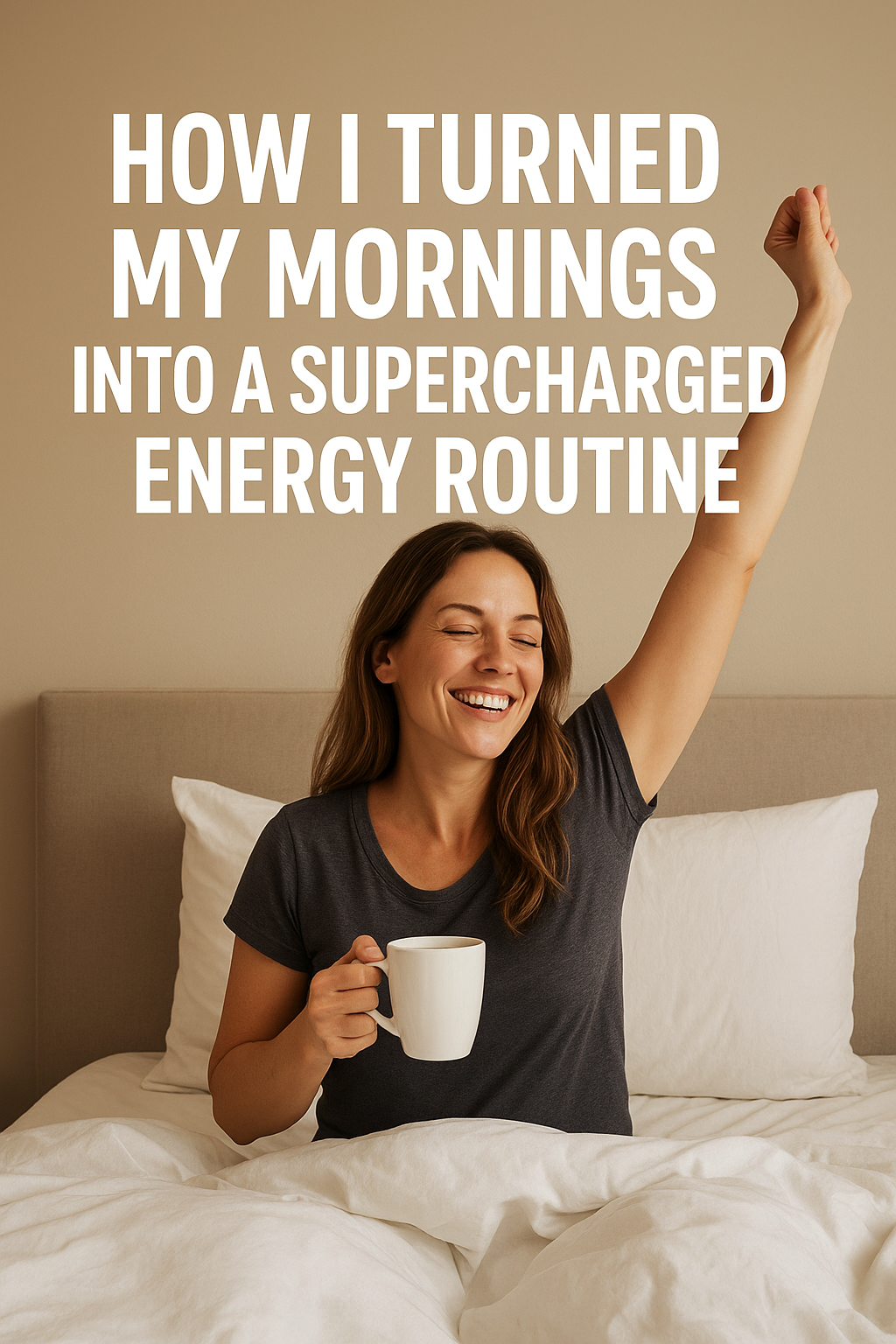
  • How I Turned My Mornings Into a Supercharged Energy Routine

    How I Turned My Mornings Into a Supercharged Energy Routine

    Mornings used to be my least favorite part of the day. Groggy eyes, a foggy mind, and the desperate chase for coffee to feel even slightly awake—it was a struggle. But lately, everything has changed. I feel free. I feel happy. And most importantly, I feel alive.

    The secret? A combination of small, intentional actions that boost both my body and mind. It’s not about doing more—it’s about doing the right things consistently. Here’s what my mornings look like now, and how they’ve transformed my life.


    Step 1: Wake Up and Energize the Body

    My morning starts with brushing my teeth and rinsing with salt water. It may sound unusual, but it’s a ritual that wakes up my senses instantly. The slight sting of saltwater clears my mind, my mouth feels fresh, and I feel awake in a way caffeine alone can’t achieve.

    Next, I drink raw ginger water. Ginger is a powerhouse—it awakens the body, improves circulation, and even boosts mood. Then comes my coffee. But unlike before, coffee now complements a body already energized, rather than being a desperate jolt to the system.

    In just a few minutes, my body feels alive, alert, and ready to move.


    Step 2: Feed the Mind

    After energizing my body, I move to my positive energy frequency meditation. Just 10–15 minutes is enough to shift my mindset for the entire day. I focus on positivity, gratitude, and setting intentions. I don’t chase results, I focus on feelings: peace, clarity, joy, and energy.

    This meditation has changed everything. I used to start my day reacting to emails, messages, and the chaos of life. Now, I start my day proactively, setting the tone before the world even opens its eyes.


    Step 3: Focus on What Matters

    I have dreams—big dreams. But I’ve learned they happen in their own time. Right now, I focus on the small, meaningful actions I can take: writing a book, blogging, working out, and taking care of myself.

    Focusing on these small things has an incredible effect. Each action, though minor alone, compounds over time. Writing a few paragraphs daily adds up to chapters. Daily workouts improve both body and mood. Blogging consistently builds a platform and sharpens my mind.

    The key is staying present and intentional. The big picture is important, but obsessing over it can create anxiety. By focusing on small, controllable actions, I feel grounded, productive, and content.


    Step 4: Movement and Mindfulness

    Somewhere in my morning routine, I incorporate movement. Whether it’s light stretching, a short walk, or a proper workout, it helps maintain energy, improves mood, and keeps my body in harmony with my mind.

    Movement is more than exercise—it’s a reset. It’s a way to release tension, refocus the mind, and maintain a flow of positive energy. Pair this with meditation, and your mind and body are in alignment.


    Step 5: Reflection and Gratitude

    Before diving fully into the day, I take a moment to reflect. A short journaling session, just 3–5 minutes, is enough to jot down insights, small wins, or things I’m grateful for. Gratitude doesn’t just feel good—it rewires the brain to notice positivity instead of dwelling on stress.

    This reflection, combined with intentional morning energy rituals, sets me up for a day full of clarity, focus, and purpose.


    Why This Routine Works

    This routine isn’t about following strict rules—it’s about creating habits that naturally boost energy and happiness. Here’s why it works:

    • Consistency compounds results: Daily small actions—writing, working out, meditating—add up over time.
    • Focus on controllable actions reduces stress: Instead of chasing results, I focus on actions I can control, which creates freedom and peace.
    • Alignment of mind and body creates energy: The combination of meditation, movement, and nourishing drinks primes my body and mind for peak performance.
    • Gratitude and reflection reinforce positivity: Daily acknowledgment of small wins keeps motivation high.

    Takeaway: Build Your Own Energy Routine

    You don’t need to wait for life to give you energy, happiness, or freedom. You can create it yourself, one intentional action at a time. Start with small rituals—things that wake your body, center your mind, and focus your attention.

    Over time, these small actions compound into a life that feels alive, free, and full of joy. Big dreams will come, but in the meantime, tending to the small, meaningful things creates a life that’s extraordinary today—not someday.

    Start small, stay consistent, and watch your energy, focus, and happiness transform your mornings—and your life.

  • The Rhythm of Kilifi: A Morning, A Mindset, A Way of Life

    The Rhythm of Kilifi: A Morning, A Mindset, A Way of Life

    The Rhythm of Kilifi: A Morning, A Mindset, A Way of Life

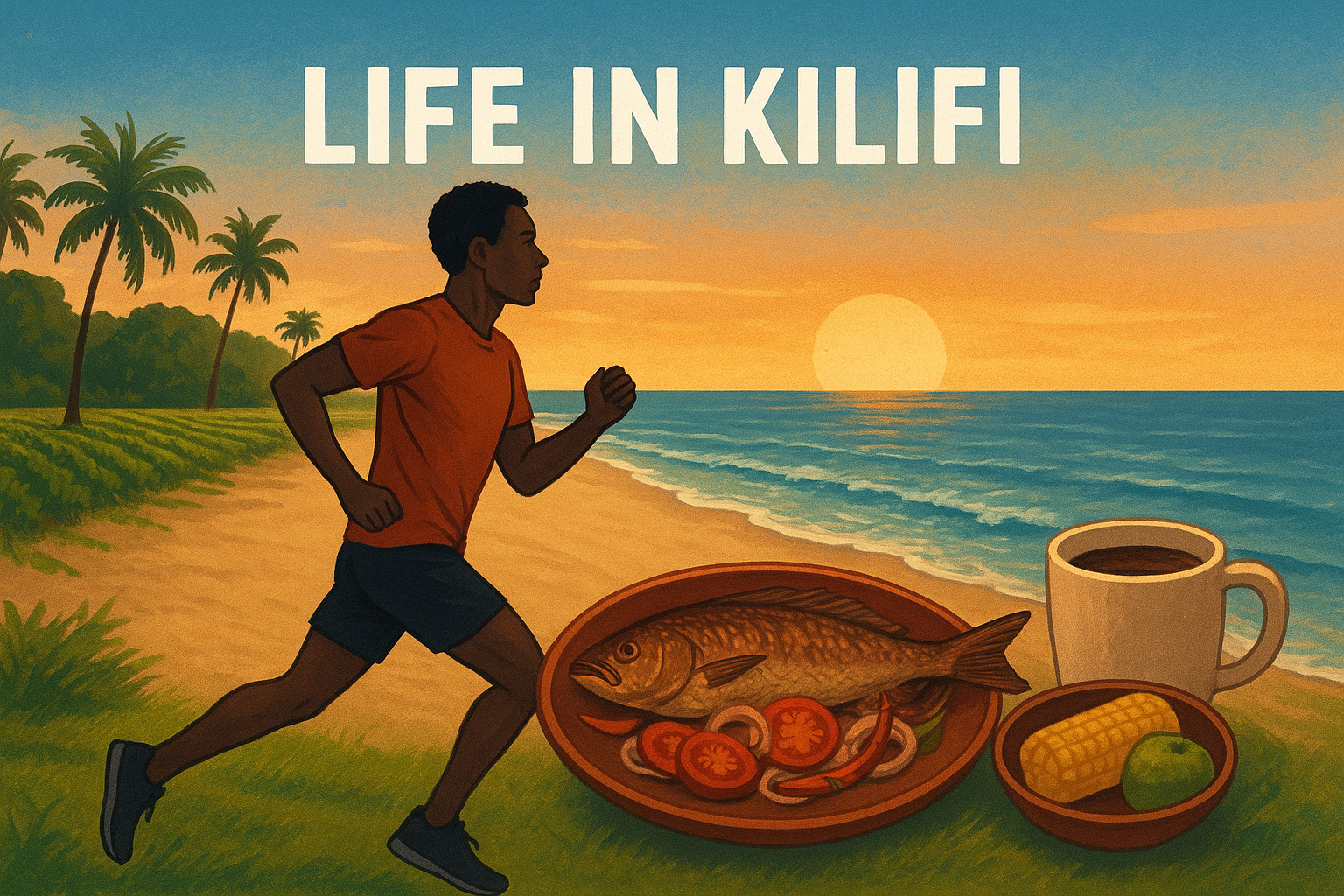
    When the sun is still a whisper behind the horizon, I’m already up — lacing my shoes as the world around me sleeps. The air in Kilifi has its own kind of silence, not empty but alive. It smells of the sea, the soil, and something ancient. At 5 a.m., I start my run through the Vipingo sisal plantation, where the cool breeze brushes against my face and the only sounds are my breath and the rustle of leaves.

    Sometimes I run, sometimes I walk, sometimes I just listen. When I reach the beach, I step into the cold water, stretch, and let the waves hit my legs. That’s my therapy — the kind that doesn’t need a gym membership. I drop down for abs, squats, push-ups, whatever my body calls for that day. I can go for hours like that, moving between silence and motion, between strength and peace.

    I train alone most of the time — a lone ranger, as people like to say. But once in a while, friends from Nairobi join me, and the energy shifts. We laugh, challenge each other, run side by side until our legs burn. During the holidays, others join too — locals, students, even visitors — all drawn by the same thing: the ocean, the open space, and the freedom to move.

    When I’m done, I go back home to refuel the coastal way. My breakfast is simple: peanuts, boiled raw maize, an apple, and a cup of hot coffee mixed with ginger and lemon. That’s it. Natural, clean, and full of energy. It’s what my body needs — not too heavy, not too fancy, just real food. The peanuts give me protein, the maize keeps me fueled, the coffee sharpens my mind, and the ginger with lemon keeps everything balanced.

    And then, there’s the food that defines where I live — fish.
    We cook it the traditional way here. Fresh fish boiled with raw sour mangoes, tomatoes, onions, and pepper — no water added, just those ingredients simmering in their own juices. The taste is deep, earthy, and full of life. You can feel the ocean in every bite. Most times, I eat it with ugali. Some days I add cabbage — I like it because it keeps me lean, and I train every day. It’s a lifestyle, not a routine.

    Even the small rituals matter — like a haircut. Every week, I visit my trusted barber. But sometimes, I admit, I cheat on him with someone else. (It happens when I’m in Nairobi — old habits die hard.) Here in Kilifi, they shave differently. They know how to use a razor blade, and when you find someone skilled, that cut is perfect. I keep my hair short now — number two on top, number one on the sides, clean and flat because my hair is a little curly.

    Then comes that moment of truth — the spirit.
    We don’t use fancy aftershaves here. Just pure spirit. When it hits your skin, it burns like fire for three seconds, and then you feel alive. I always close my eyes, breathe through the sting, and when it passes, I feel fresh — like a reset.

    People tell me I don’t look my age. Maybe it’s the lifestyle — the early mornings, the clean food, the peace of mind. Sure, white hair has started to show, but I’ll never dye it. I embrace it. Every strand tells a story.

    Living here has taught me something simple: you don’t need much to feel alive.
    Just a good run, honest food, a sharp razor, and peace in your heart.

    That’s Kilifi.
    That’s me.

  • The Quiet Strength of Staying

    The Quiet Strength of Staying

    There comes a point in life when everything feels too heavy — when getting out of bed feels like lifting a mountain, and silence becomes both your comfort and your cage. People tell you to “stay strong,” but they never say that sometimes strength looks like tears, stillness, and simply choosing not to give up.

    The world glorifies healing as a grand transformation — the before and after, the glow-up, the comeback story. But real healing? It’s quieter than that. It happens in unseen moments: when you breathe through another wave of sadness, when you forgive yourself for not being okay, when you whisper maybe tomorrow instead of I can’t anymore.

    You are not falling behind. You are mending, even when it feels like nothing’s changing. Healing doesn’t announce itself; it grows silently in the spaces where you decide to keep trying.

    If you’re still here, still breathing, still hoping — even a little — that’s enough. That’s courage. That’s proof you’re not broken beyond repair.

    The day will come when the heaviness lifts — not all at once, but slowly, like light creeping through the cracks. You’ll smile without forcing it. You’ll feel peace without searching for it.

    Until then, don’t rush your becoming. Just stay. That, in itself, is a quiet kind of victory.

  • You Are Not Falling Behind — You Are Growing Quietly

    You Are Not Falling Behind — You Are Growing Quietly

    There are days when silence feels heavy — when you wake up and realize no one has texted, when laughter echoes from somewhere else and you wonder if you’ve simply faded from the world. Loneliness can make you feel small, as if the world has moved on without you.

    But hear this: you are not invisible. You are not forgotten. You are simply in a quieter chapter of your story — one that’s helping you grow in ways no one can see yet.

    Sometimes life slows down to teach us what presence really means. It gives us space to rediscover ourselves — to learn what peace sounds like when the noise fades. It’s in these moments, when you think you’re alone, that you’re actually being rebuilt from the inside out.

    The people meant for you haven’t passed you by; they are still finding their way, just like you are. The love, friendship, and purpose you’re longing for — they’re not gone. They’re growing roots beneath the surface, waiting for the right season to bloom.

    So don’t rush this part. Sit with it. Breathe through it. Do small things that make your heart feel alive again — step outside, listen to music that moves you, speak kindly to yourself. Healing doesn’t always roar; sometimes it whispers.

    You are not behind. You are becoming. And even if you can’t see it yet, the world is quietly making room for the version of you who will rise from this season — softer, stronger, and more open to love than ever before.

  • The Loneliness Epidemic: Why So Many Feel Alone in a Connected World

    We’re more connected than ever — yet millions feel lonely. Explore the loneliness epidemic, why it’s rising, and how to find real connection in a digital world.


    Connected — Yet Disconnected

    You can message a friend across the world in seconds, share your thoughts with hundreds of followers, and scroll through endless updates — yet still feel completely alone.

    It’s the great paradox of our time: the more connected we become, the lonelier we feel.

    Psychologists call it the loneliness epidemic — a growing sense of disconnection despite constant digital contact. And it’s not just emotional; it’s physical, mental, and social.


    The Hidden Cost of Digital Connection

    Technology has brought us closer, but not always deeper.
    Social media creates the illusion of closeness — likes, messages, notifications — yet much of it lacks the warmth of real presence.

    Our brains, wired for genuine human interaction, can’t fully recognize online engagement as true connection.
    So while we’re scrolling through highlight reels, our deeper need — to be seen, heard, and understood — goes unmet.

    Over time, this leads to emotional fatigue, comparison, and quiet isolation.


    Why Loneliness Hurts More Than We Think

    Loneliness isn’t just a feeling — it’s a signal.
    Our bodies treat it like hunger or thirst — a message that we need social nourishment.

    Research shows that chronic loneliness can raise stress levels, weaken the immune system, and increase the risk of depression and anxiety. It’s as harmful to health as smoking 15 cigarettes a day, according to one major study.

    But there’s good news: the cure isn’t out of reach. It starts with rebuilding the kind of connection technology can’t replace — the human kind.


    From Digital Loneliness to Real Connection

    Here’s how to start reconnecting — with others, and with yourself:

    1. Be present in real life. When you’re with someone, put the phone away. Look, listen, and engage fully.
    2. Seek depth, not breadth. A few authentic relationships matter more than hundreds of followers.
    3. Share honestly. Vulnerability creates true intimacy — online and offline.
    4. Check in with yourself. Sometimes, loneliness isn’t about others missing — it’s about you drifting away from yourself.

    Small moments of genuine connection — eye contact, laughter, a shared silence — are what truly fill us up.


    The Role of Solitude in Healing Loneliness

    Ironically, the path out of loneliness often begins with embracing solitude.
    Spending quiet time alone helps you reconnect with your inner world, clarify what kind of relationships you want, and learn to enjoy your own company.

    When you’re comfortable being with yourself, you approach others not from need, but from wholeness.
    That’s when connection becomes healing — not just distracting.


    A New Kind of Connection

    The loneliness epidemic is a call — not for more messages or followers, but for more meaning.

    It’s about slowing down, showing up, and remembering that real connection starts with presence — one honest moment at a time.

    Because when we connect with intention, we don’t just end loneliness.
    We begin belonging.

  • Why We Fear Being Alone — but Crave It Anyway

    We fear being alone, yet we crave it. Explore the psychology behind our love-hate relationship with solitude — and learn how to make peace with being by yourself.


    The Paradox of Solitude

    You cancel plans just to stay home — then spend the evening scrolling and feeling guilty for being alone.
    You dream of a weekend getaway by yourself — but when the silence hits, it feels uncomfortable.

    Sound familiar?
    That’s the human paradox: we fear being alone, yet deep down, we crave it.

    This tug-of-war between solitude and connection isn’t just emotional — it’s biological and psychological.


    Why We Fear Being Alone

    For most of human history, being alone meant danger. We survived by belonging to tribes and groups. The fear of isolation is wired deep into our brains — the same circuits that light up for physical pain also react to loneliness.

    When we’re alone, that ancient alarm system goes off. It whispers:

    “You’re unsafe. You don’t belong.”

    So, we fill the silence with noise — social media, messages, or background TV. Anything to avoid the feeling of disconnection.

    But here’s the twist: what once kept us alive can now keep us stuck — always seeking company, rarely finding peace.


    Why We Crave Solitude

    Despite the fear, something inside us longs for quiet. That’s because solitude isn’t the same as loneliness.
    Loneliness is emptiness.
    Solitude is presence — presence with yourself.

    In solitude, your mind finally stops reacting and starts reflecting. You reconnect with your thoughts, your creativity, your intuition. Studies show that spending time alone can actually improve emotional regulation, focus, and empathy.

    In short: being alone helps you remember who you are when no one’s watching.


    The Real Problem Isn’t Solitude — It’s Avoidance

    Many people think they fear being alone, but what they actually fear is meeting their unfiltered self.
    The silence of solitude acts like a mirror — reflecting everything you’ve been avoiding: your doubts, desires, regrets, and dreams.

    But here’s the beauty: once you face those reflections, they lose their power. What was once uncomfortable becomes freeing.


    How to Make Peace With Being Alone

    1. Start small. Spend 10–15 minutes each day without your phone or distractions.
    2. Do something just for you. A walk, journaling, music — anything that reconnects you with yourself.
    3. Reframe solitude. Don’t see it as “no one wants to be with me.” See it as “I’m choosing to be with myself.”
    4. Observe, don’t judge. When loneliness arises, notice it gently instead of running from it.

    With time, you’ll find that solitude isn’t a punishment — it’s an invitation.


    Final Thought

    Being alone doesn’t mean being lonely. It means giving yourself space to breathe, think, and grow.

    We fear solitude because it strips away the noise — but that’s exactly where truth lives.
    And when you learn to be comfortable in your own company, you’ll never feel truly alone again.

Verified by MonsterInsights