Category: Personal Development

  • Consistency Will Beat Motivation This Year

    Consistency Will Beat Motivation This Year

    Motivation is exciting.

    It gives you that surge of energy at the beginning of the year—the fresh notebook, the new plans, the belief that this time will be different. Motivation makes promises quickly and confidently.

    But motivation is also unreliable.

    It fades when results are slow.
    It disappears when life interrupts.
    It vanishes the moment discomfort shows up.

    If this year is going to be different, it won’t be because you felt motivated every day.
    It will be because you stayed consistent even when you didn’t feel like it.

    The Problem With Chasing Motivation

    Most people don’t fail because they lack desire.
    They fail because they depend on emotion to carry discipline.

    Motivation is emotional.
    Consistency is structural.

    When you rely on motivation, you work only when conditions feel right—when energy is high, confidence is strong, and distractions are low. But life rarely cooperates with perfect conditions.

    That’s why so many goals collapse by February.

    Not because the goal was wrong—but because the system was weak.

    Consistency Is Boring—and That’s Why It Works

    Consistency doesn’t look impressive at first.

    It’s doing small things on ordinary days.
    It’s showing up when no one is watching.
    It’s repeating actions that don’t yet feel rewarding.

    There are no dramatic highs in consistency. No viral moments. No instant validation.

    But there is progress.

    Quiet, compounding progress.

    What feels insignificant daily becomes powerful over time.

    The Myth of Overnight Success

    We celebrate breakthroughs but ignore the years behind them.

    Behind every “sudden” success is:

    • Daily practice
    • Missed opportunities
    • Slow learning
    • Unseen discipline

    Consistency builds capacity.
    Capacity attracts opportunity.

    People who appear lucky are often just prepared.

    Why This Year Should Be About Systems, Not Goals

    Goals give direction, but systems determine outcomes.

    A goal says what you want.
    A system defines how you live daily.

    Instead of asking:

    • “What do I want to achieve this year?”

    Ask:

    • “What kind of person do I need to become?”

    Then build habits that support that identity.

    Small systems win:

    • Writing a page a day
    • Reading ten minutes daily
    • Practicing a skill regularly
    • Protecting one focused hour

    Consistency turns identity into reality.

    Doing Less—But Doing It Well

    One reason people struggle with consistency is overload.

    Too many goals.
    Too many projects.
    Too many expectations.

    This year is not about doing more.
    It’s about doing what matters—repeatedly.

    Depth beats breadth.
    Focus beats frenzy.

    When you simplify, consistency becomes possible.

    Discipline on the Days You Don’t Feel It

    Consistency matters most on low-energy days.

    Anyone can work when inspired.
    Few can work when tired, uncertain, or discouraged.

    Discipline is choosing to act even when emotion resists.

    Not perfectly.
    Not endlessly.
    But intentionally.

    Missing a day is human.
    Quitting is a choice.

    Consistency is not never failing—it’s returning quickly.

    Trusting the Slow Build

    The hardest part of consistency is trusting that small efforts matter.

    You won’t always feel progress.
    You won’t always see results.

    But growth often happens beneath the surface.

    Like muscles strengthening after rest.
    Like seeds growing underground before breaking soil.

    If you trust the process long enough, results will follow.

    This Is the Year You Stay

    Not the year you start loudly and disappear quietly.
    Not the year of constant reinvention.

    This is the year you stay with the work.

    Stay with the habit.
    Stay with the discipline.
    Stay when it’s uncomfortable.

    Momentum comes from staying.

    A Simple Rule for the Year

    When motivation fades, ask yourself one question:

    “What is the smallest action I can take today that keeps me consistent?”

    Not the perfect action.
    Not the hardest action.

    Just the honest one.

    Small actions keep the chain unbroken.
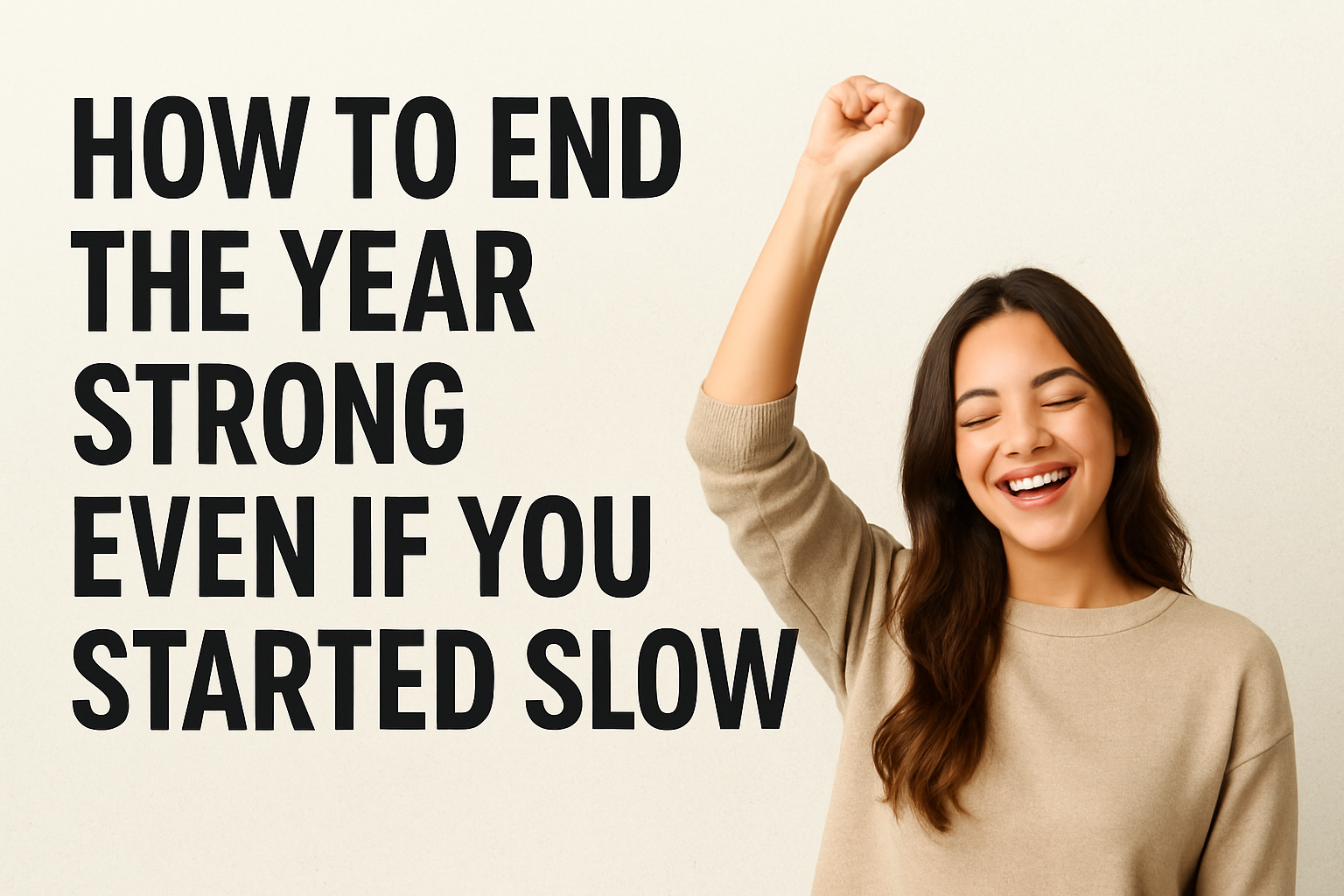
  • How to End the Year Strong Even If You Started Slow

    How to End the Year Strong Even If You Started Slow

    The end of the year has a way of making people reflect. Some feel proud, others feel frustrated, and many sit quietly thinking, “I should have done more with my year.” If that’s you, take a breath. A slow start doesn’t mean a weak finish — it simply means your story is still unfolding.

    The beauty of the year’s ending is that it gives you a chance to rewrite your narrative. You may not control how the year began, but you absolutely control how it ends. And that power alone can change everything.


    1. A Slow Start Doesn’t Define You

    We live in a world obsessed with fast success — fast growth, fast wins, fast breakthroughs. But real life doesn’t always move that way. Some of the most powerful stories start quietly, slowly, or even painfully. Progress isn’t always loud.

    The truth is this:
    Your value isn’t measured by how quickly you moved, but by how you rise when it matters.

    Maybe your year was chaotic. Maybe you lost focus. Maybe you survived more than you achieved. That does not disqualify you. In fact, it prepared you. What looked like delay was often shaping your strength, your mindset, and your clarity.

    And now — you get to finish with intention.


    2. Focus on Small Wins

    One mistake people make at the end of the year is trying to “fix” everything in a rush. That pressure leads to burnout, not progress. The secret to ending the year strong is simple: small wins.

    Small wins build confidence, and confidence builds momentum.

    Try these:

    • Declutter your room or workspace
    • Start reading one uplifting book
    • Plan your 2026 goals
    • Begin a simple fitness habit
    • Fix one unhealthy pattern
    • Save a small amount of money
    • Spend time reflecting
    • Start one creative idea
    • Forgive someone who weighs on your heart

    These seem small, but they change your energy. They shift the story. They help you walk into the new year feeling light, focused, and ready.


    3. Reflect Without Regret

    Reflection is powerful, but many people avoid it because they fear disappointment. But reflection isn’t about punishment. It’s about understanding yourself more deeply.

    Ask yourself:

    • What slowed me down this year?
    • What did I learn?
    • What am I proud of?
    • What needs to change?
    • What do I want to leave behind before the year closes?

    These questions turn the past into guidance instead of guilt. They help you enter the new year wiser, not wounded.


    4. Protect Your Peace

    The final weeks of the year can be loud — family drama, financial stress, expectations, social pressure. If you’re not careful, the noise will drain your energy and distract you from ending strong.

    Protect your peace by being intentional:

    • Avoid unnecessary conflicts
    • Take breaks from negativity
    • Set boundaries where needed
    • Make time for rest and clarity

    Your energy is your greatest asset right now. Guard it.


    5. Choose Your Ending

    You can’t change everything that happened this year, but you can absolutely change how the story ends. The final chapter is yours to write.

    You can choose to start something new.
    You can choose to rebuild confidence.
    You can choose to heal.
    You can choose discipline.
    You can choose hope.
    You can choose to finish strong.

    A slow beginning is never the problem.
    Quitting is — and you haven’t quit.
    You’re still here, still trying, still fighting for a better version of yourself.

    That’s strength.


    A Message From the Author

    If you didn’t know — I am an author on Amazon.
    My name is Joseph Kiragu or Joseph Kirash, and I write books that focus on transformation, discipline, healing, and personal power. My mission is to help people build stronger lives from the inside out.

    If you want motivation that goes deeper and helps you end this year with purpose, here are a few of my books:

    Click the links below https://a.co/d/dgw08Hu, https://a.co/d/h1BQk3t, https://a.co/d/5cshkGP, https://a.co/d/flTzzvv, https://a.co/d/bRfC4wM

  • Why Your 20s Don’t Define You — But Your Discipline Does

    Why Your 20s Don’t Define You — But Your Discipline Does

    Society loves to glamorize the idea that your 20s are the most important decade of your life — the years where you must figure everything out, become successful, fall in love, establish your identity, and somehow build the foundation for the next 50 years. It’s a beautiful story, but also a dangerous one. Because the truth is simple: your 20s don’t define you — your discipline does.

    We live in a world where timelines are treated like rules. Graduate at 22. Have a career by 25. Be financially stable by 27. Get married by 30. Yet when you look closely at reality, life is far less predictable — and far more forgiving. The people who become truly great rarely follow a perfect timeline. They follow a consistent work ethic.

    Your 20s are not a finish line. They’re not even the race. They’re the warm-up, the stage where you make mistakes, test ideas, discover strengths, and fail forward into who you’re becoming. You’re not behind — you’re building. And what you’re building has nothing to do with age and everything to do with discipline, vision, and persistence.

    1. Your 20s Are an Experiment, Not a Final Draft

    The biggest lie about your 20s is that they’re supposed to make sense. In reality, most people in their 20s feel lost, confused, and overwhelmed — even the ones who pretend to have everything together. Behind the aesthetic Instagram photos and confident captions, you’ll find uncertainty, self-doubt, and trial-and-error.

    And that’s okay.
    Your 20s are designed for exploration. These are the years where you:

    • try things that don’t work
    • discover what you don’t want
    • experience discomfort that shapes you
    • make mistakes that teach you
    • outgrow people you once thought were permanent

    What matters is not whether you have life figured out. What matters is that you keep moving — that you keep learning, adjusting, waking up, and trying again. Growth requires motion, not perfection.

    2. Discipline Outweighs Talent, Luck, and Age

    Talent is beautiful, but unreliable.
    Luck is unpredictable.
    Age is irrelevant.

    Discipline, on the other hand, is always there — waiting to be used, waiting to transform your life.

    A person with discipline will surpass a naturally gifted person who lacks consistency. A person with discipline will create opportunities even when luck refuses to show up. A person with discipline will build a future even when their age seems “behind the timeline.”

    Discipline is the great equalizer.
    It turns dreams into goals.
    It turns goals into plans.
    It turns plans into results.

    3. Success Happens When You Stay With Boring Things Long Enough

    People love the idea of success — the lifestyle, the confidence, the rewards. What they don’t love is the process: repetition, routine, patience, and the daily grind no one else sees.

    Success is built in silence.
    Mastery is formed in repetition.
    Breakthroughs are born from boring consistency.

    Your 20s don’t define you because your results aren’t supposed to show yet. You’re planting seeds. And seeds don’t care about age — they care about consistency, watering, sunlight, and time.

    4. Reinvention Is Always Possible — And Often Necessary

    If you think you need to stick to the first version of yourself forever, you’re mistaken. Reinvention is one of the most powerful advantages you have in life — and it doesn’t expire once you leave your 20s.

    You can change careers at 30.
    Start a business at 35.
    Find your true passion at 40.
    Begin your healing journey at 50.
    Become your best self at 60.

    There is no deadline on transformation.
    There is no age limit on ambition.
    There is no expiration date on dreams.

    But what determines whether reinvention succeeds or fails is discipline — your willingness to start again, learn again, and work again.

    5. Your 20s Teach You Something More Important Than Success

    They teach you self-awareness — who you are, who you are not, and who you want to become.

    This decade isn’t about “making it.”
    It’s about understanding yourself well enough that when success finally appears, you’re ready for it.

    Your 20s give you clarity, humility, direction, resilience, and identity. But these lessons only have value when paired with consistent effort. Clarity without discipline is just daydreaming.

    6. When You Choose Discipline, You Choose Your Future

    The moment you decide to be consistent — even at a small scale — your life begins to shift. Discipline creates momentum. Momentum creates progress. Progress creates confidence. And confidence creates a new identity: someone who follows through.

    It doesn’t matter where you live, what job you have, who believes in you, or how uncertain your future feels. If you choose discipline, you choose growth. You choose evolution. You choose the future version of yourself who looks back and says:

    “I didn’t have everything figured out in my 20s.
    But I stayed consistent.
    And that changed everything.”

    Your 20s are not a verdict; they are a beginning. You are not behind. You are not late. You are not failing. You are becoming.

    What will define your life is not how quickly you “figure it out,” but how consistently you show up — with intention, hunger, and discipline.

    Your 20s don’t define you.
    Your habits do.
    Your consistency does.
    Your discipline does.
    And that’s the best news — because those are all things you control.

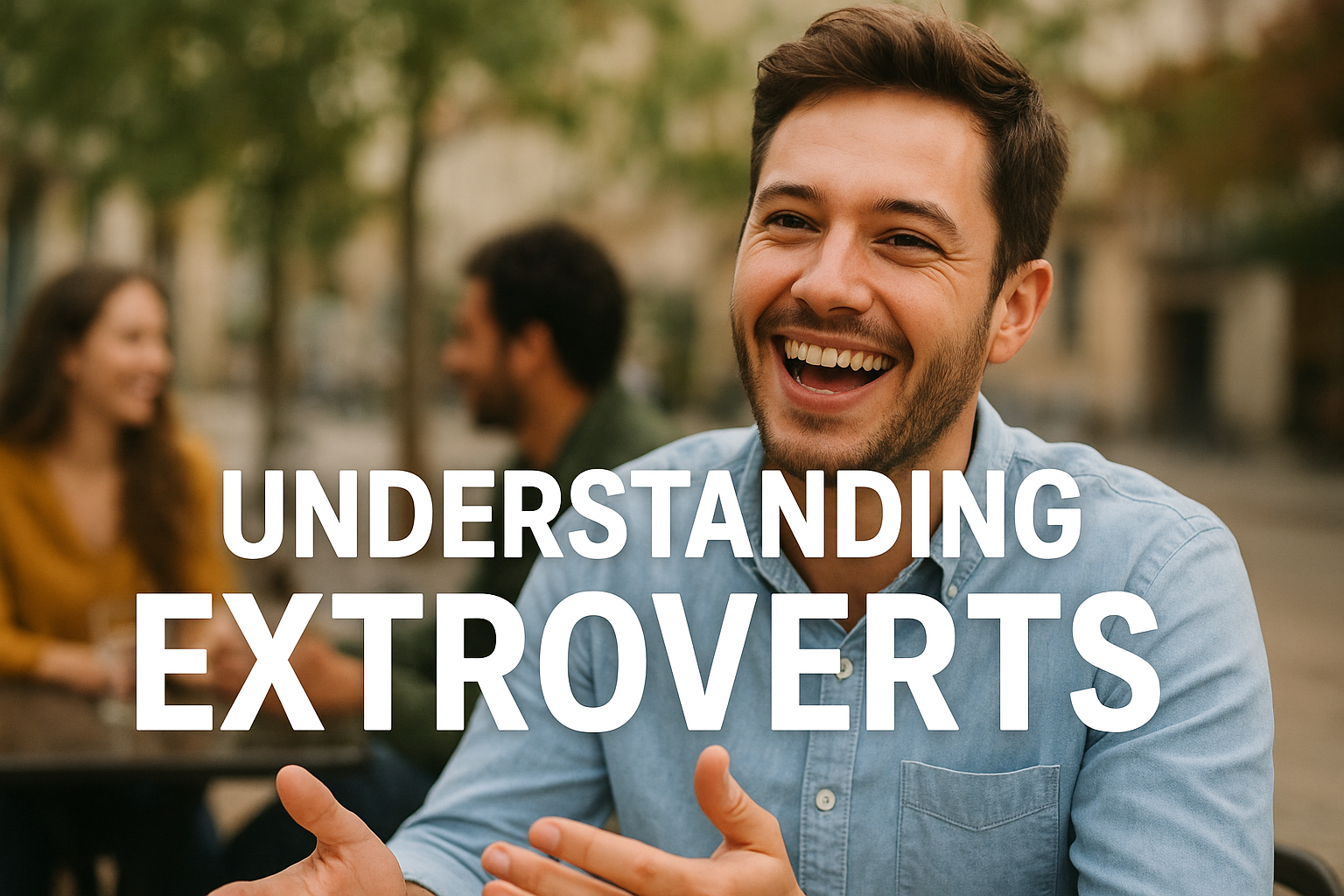
  • Understanding Extroverts: Energy, Strengths, and Social Mastery

    Understanding Extroverts: Energy, Strengths, and Social Mastery

    Extroverts are often seen as the life of the party, the natural leaders, or the people who always seem to have endless energy and ideas. But being an extrovert is more than just being outgoing—it is a personality trait defined by how one gains energy, interacts with the world, and approaches challenges. Understanding extroverts can help us appreciate their strengths, recognize misconceptions, and create more harmonious personal and professional relationships.

    At its core, extroversion is about energy. Extroverts gain vitality from social interaction. While introverts might feel drained by large groups or constant social engagement, extroverts thrive in dynamic environments. They are energized by conversation, collaboration, and shared experiences. This energy often translates into charisma, quick thinking, and an ability to inspire those around them. In professional settings, extroverts can motivate teams, lead projects, and communicate ideas effectively. In social situations, they can effortlessly forge connections and build networks.

    However, extroverts are often misunderstood. Some perceive them as attention-seeking or superficial, but these assumptions miss the essence of extroversion. Extroverts are not necessarily louder or more dominant—they simply draw strength from engagement. Their expressive nature is a reflection of their internal energy, not a need for validation. When understood correctly, extroverts can be invaluable allies, bringing enthusiasm, fresh perspectives, and momentum to any group or project.

    One of the most notable strengths of extroverts is their adaptability. They are comfortable navigating uncertainty, speaking in public, and taking initiative. Extroverts often embrace new challenges with optimism, using their energy to overcome obstacles and inspire action. This adaptability also makes them excellent collaborators. They can connect with diverse personalities, mediate conflicts, and bring people together to achieve shared goals.

    Yet, extroverts also face challenges. Their desire for social engagement can sometimes lead to overcommitment or distraction. They may struggle with introspection or spending time alone, which can limit opportunities for reflection and personal growth. Understanding these tendencies allows extroverts to balance their energy—leveraging their strengths while ensuring they also cultivate focus, patience, and depth.

    For introverts or those who work closely with extroverts, understanding their behavior can enhance collaboration. Recognize that extroverts may process ideas by talking through them or brainstorming aloud. They often prefer immediate interaction rather than solitary reflection. Engaging with extroverts requires openness, responsiveness, and an appreciation for their energetic approach. When balanced with thoughtful planning and active listening, partnerships between extroverts and introverts can be extraordinarily effective.

    Extroverts also benefit from self-awareness. By recognizing the value of quiet reflection, they can make more intentional decisions, avoid burnout, and deepen their insights. They thrive when they balance social engagement with periods of focus, learning to channel their energy purposefully rather than simply reactively. Extroversion is not a license for constant action—it is a tool for connection, influence, and growth when used wisely.

    Ultimately, extroverts remind us of the power of engagement. They show that energy, positivity, and collaboration can create momentum in life, work, and relationships. They teach us that being open, expressive, and connected is not only natural—it is a strength that, when understood and harnessed, can transform teams, communities, and personal ambitions.

    By understanding extroverts, we can foster better relationships, improve communication, and leverage the unique strengths that extroverted individuals bring to the table. Whether in friendship, business, or leadership, recognizing and appreciating extroversion allows us to work smarter, connect deeper, and create environments where everyone’s potential—introverted or extroverted—can thrive.

    Extroverts are not just social butterflies—they are catalysts, innovators, and connectors. Appreciating who they are, how they operate, and what they contribute opens doors to collaboration, success, and meaningful relationships. In a world that thrives on connection, understanding extroverts is not just useful—it’s essential.

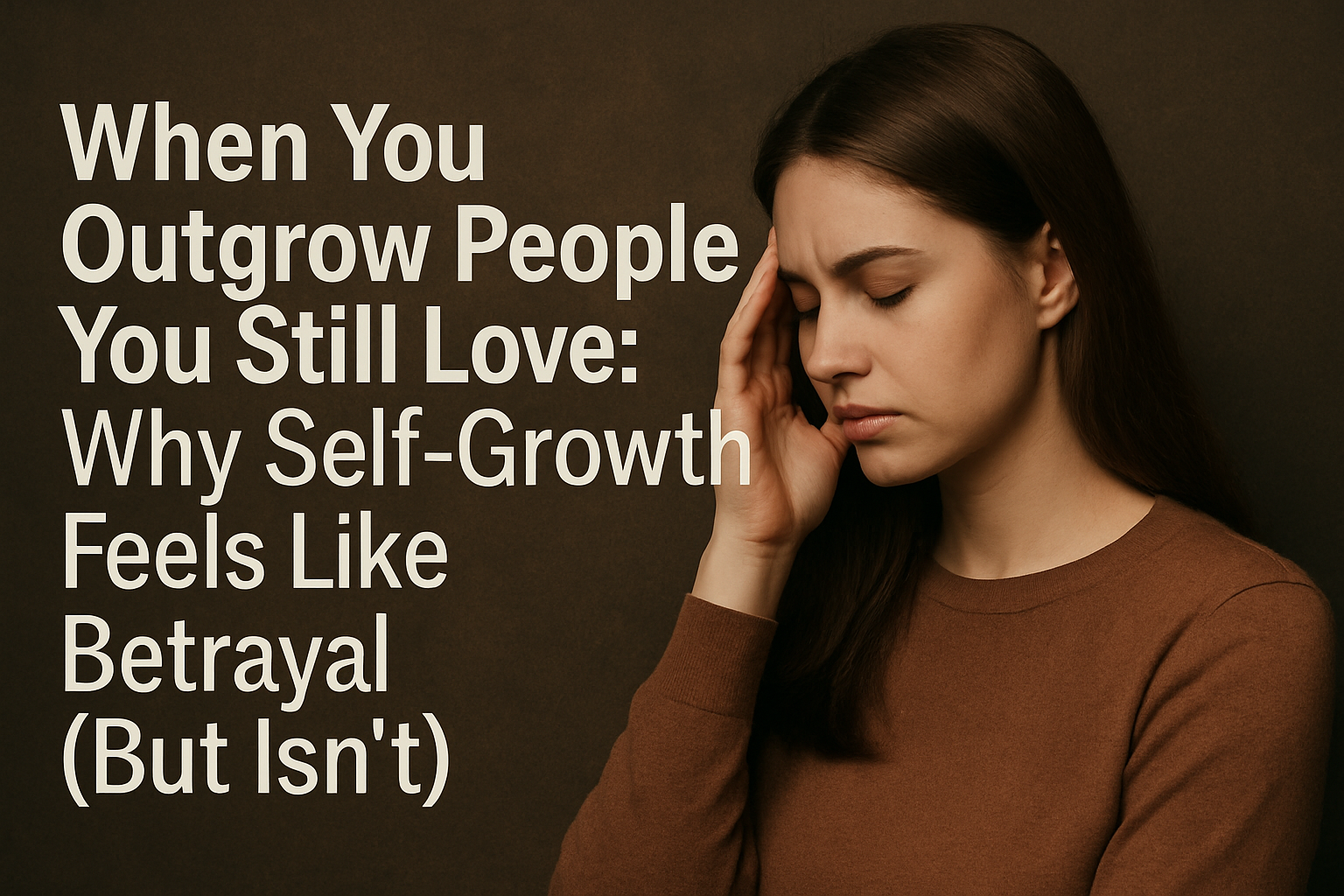
  • When You Outgrow People You Still Love: Why Self-Growth Feels Like Betrayal (But Isn’t)

    When You Outgrow People You Still Love: Why Self-Growth Feels Like Betrayal (But Isn’t)

    There’s a strange kind of pain nobody prepares you for — the pain of outgrowing people you still care about.
    It hits quietly, almost softly, like a whisper inside you saying:

    “This doesn’t feel like home anymore.”

    Not because the people changed.
    Not because you stopped loving them.
    But because you changed.

    You grew.
    Your mind expanded.
    Your spirit shifted.
    Your ambitions stretched into new territory.
    And suddenly the conversations, the habits, the environments that once felt comfortable… now feel too small.

    But here’s the hardest part:
    Loving people doesn’t always mean you’re meant to stay with them forever.


    The Guilt That No One Talks About

    When you outgrow someone, guilt becomes your shadow.

    You ask yourself:
    “Am I abandoning them?”
    “Am I becoming cold?”
    “Am I selfish for wanting more?”
    “Why do I feel distant from people I still love?”

    But growth feels like betrayal only when you don’t understand it.

    You’re not betraying anyone.
    You’re honoring the person you’re becoming.

    And sometimes the people you love aren’t meant to grow in the same direction — or at the same pace — as you.
    That doesn’t make them bad.
    It just makes you different now.


    Why Growth Changes Your Circle

    Self-expansion shifts your standards.
    Healing shifts your boundaries.
    Awareness shifts what you tolerate.

    Suddenly, you start noticing things you used to normalize:

    • Conversations that drain you
    • Friendships built only on convenience
    • People who love you but don’t understand you
    • Environments that hold you to your older, smaller self
    • Cycles you’re not willing to repeat anymore

    When you evolve internally, the world around you demands re-evaluation.

    And outgrowing people isn’t losing them —
    it’s losing the version of you that needed them.


    Not Everyone Can Go Where You’re Going

    Some people love the old version of you — the one who didn’t know better, didn’t want more, didn’t see further.

    Your growth challenges their comfort.
    Your ambition makes them uncomfortable.
    Your awareness confronts their denial.
    Your healing exposes their wounds.

    So they try to pull you back.
    Not out of malice — but out of fear.

    Because the moment you rise, your presence forces them to see their own stagnation.

    And not everyone is ready for that mirror.


    You Can Love People From a New Distance

    Growing apart doesn’t mean you wish them harm.
    It means you are no longer aligned.

    Some people were meant to walk with you only through certain chapters, not the whole story.

    You can:

    • Love them
    • Respect them
    • Treasure the memories
    • Pray for their good
    • Still choose a different path

    Everything doesn’t have to end with drama or bitterness.
    Sometimes the softest goodbye is simply moving differently.


    When You Finally Choose Yourself

    The moment you stop feeling guilty for your growth, everything shifts:

    • You speak more clearly
    • You set boundaries effortlessly
    • You seek alignment, not approval
    • You protect your peace more fiercely
    • You attract people who match your energy
    • You evolve into someone you barely recognize — in the best way

    Self-expansion isn’t selfish.
    Self-abandonment is.

    Choosing your growth is choosing your future.


    This Is What Growth Really Means

    Growth is not just changing your habits.
    It’s changing your identity, your environment, your relationships, and your future.

    Growth is:

    • Becoming someone you’re proud of
    • Becoming someone your younger self needed
    • Becoming someone your older self will thank
    • Becoming someone who no longer fits inside the small spaces you once lived in

    You were never meant to stay the same.
    And you were never meant to carry everyone with you.

    Some people are lessons.
    Some are blessings.
    Some are temporary companions.
    And some only make sense in your memory.

    But you — you are the constant.
    You are the one who must keep moving.


    Outgrowing Isn’t Cruel. Staying Small Is.

    At the end of the day, the people who truly love you won’t be threatened by your growth — they will rise with you or cheer you on.

    And the ones who fall away?

    Be grateful.
    Because their presence belonged to the version of you that no longer exists.

    You’re allowed to evolve.
    You’re allowed to want more.
    You’re allowed to become different.
    You’re allowed to outgrow even the people you love.

    This isn’t betrayal.
    This is becoming.

  • How to Help Yourself When Life Isn’t Making Sense Anymore

    How to Help Yourself When Life Isn’t Making Sense Anymore

    There comes a time in life when everything feels blurry. The plans you trusted stop working, the people you leaned on feel distant, and even your own thoughts become confusing. You wake up and go through the motions, but inside, nothing is connecting. Life used to have direction, and now it feels like you’re floating without an anchor.

    If you’ve ever been in that place — feeling stuck, overwhelmed, or quietly breaking inside — understand this: you are not alone. Almost everyone reaches a point where life stops making sense. The difference lies in how we respond. Some people drown in the confusion, and others slowly climb their way out by taking small, intentional steps.

    Self-help is not about pretending everything is fine. It’s not about forcing positivity or smiling through pain. True self-help is about honesty — admitting that something is off, acknowledging your emotions, and choosing to take control of your life piece by piece. It’s about choosing to move, even when the movement is slow.

    Start With Self-Awareness: Understanding Your Inner Landscape

    When life stops making sense, your first task is to understand what’s happening inside you. Not outside — inside. Most people try to fix their lives by changing external things: switching jobs, traveling, distracting themselves, or constantly seeking new people. But real change begins within.

    Take time to ask yourself questions without judgment:

    • What has been bothering me lately?
    • What thoughts keep repeating in my mind?
    • What behavior patterns am I stuck in?
    • What drains my energy the most?
    • What makes me feel calm or alive?

    These questions force you to slow down and look inward. Self-awareness is powerful because once you can name your problem, you can begin to solve it. Sometimes your pain is caused by exhaustion. Sometimes it’s loss, heartbreak, confusion, or fear of the unknown. Other times it’s simply that you’ve outgrown your old life, and the discomfort you feel is growth trying to happen.

    The answers won’t come in one day. But the more honest you become with yourself, the clearer your path becomes.

    Remove the Noise: Life Makes More Sense in Simplicity

    When everything feels overwhelming, the worst thing you can do is complicate your life further. You don’t need a long checklist, a perfect morning routine, or a life-changing plan. You need simplicity — small wins that give you back your sense of control.

    Start with one small habit today:

    • Clean your space
    • Drink more water
    • Take a 10-minute walk
    • Open your windows and breathe
    • Write down your thoughts
    • Stretch or move your body

    These actions might feel too small, but they do something important: they shift your energy. When your environment becomes lighter, your mind follows. When your body moves, your emotions loosen. When you write your thoughts down, they stop swirling in your head.

    People underestimate the power of small steps because they are not dramatic. But small steps are where self-help truly begins. You don’t fix your life by doing something grand. You fix your life by doing something consistent.

    Let Go of What You Can’t Control

    One of the biggest reasons life stops making sense is that we spend too much time trying to control things that were never in our hands. People’s opinions, timing, outcomes, past mistakes, future uncertainties — these things drain your energy, not because they are difficult, but because they are impossible to control.

    Letting go doesn’t mean you stop caring. It means you stop carrying what isn’t yours.

    Focus on:

    • Your actions
    • Your attitude
    • Your routines
    • Your reactions
    • Your daily choices

    These are the things within your control, and they are more powerful than you think. The moment you stop chasing the things you can’t control, your life becomes lighter. Your anxiety reduces. Your mind becomes clearer. And naturally… things begin to make more sense.

    Be Patient: Growth Is Slow, Healing Is Messy

    One of the hardest truths about self-help is this: nothing changes overnight. Growth is slow. Healing is uncomfortable. Reinvention takes time.

    Some days you will feel strong and motivated. Other days you will feel like you’re starting from zero again. That is normal. That is human. That is part of the process.

    Think of your life like a garden. You can plant seeds today, but they won’t become flowers tomorrow. They need water, sunlight, and time — and so do you.

    Be kind to yourself on the days you feel slow. Be understanding on the days you feel confused. Don’t quit on yourself just because progress isn’t visible yet. Sometimes the biggest changes happen underground, quietly.

    Reinvent Yourself One Step at a Time

    When life stops making sense, it is usually a sign that something in you is ready to change. Maybe you’ve outgrown your environment, your habits, or even your past identity. Reinvention is not about becoming a different person — it’s about becoming a more honest version of yourself.

    Ask yourself:

    • Who am I becoming?
    • What kind of life feels right for me now?
    • What am I holding onto that no longer serves me?
    • What new habits do I want to build?

    Reinvention doesn’t require big leaps. It requires consistent steps. Change your mornings. Change your conversations. Change your habits. Change what you tolerate. Change how you talk to yourself. Slowly, you begin to shape a new direction.

    Show Up for Yourself, Even When You Don’t Feel Like It

    This might be the most important part.

    Self-help works only if you practice it daily — not just on the good days, but especially on the difficult ones. Anyone can show up when life is smooth. But the people who transform their lives are the ones who show up even when they are tired, discouraged, or unsure.

    Show up for yourself in small ways:

    • Make your bed
    • Take a shower
    • Drink your water
    • Keep one promise to yourself
    • Do one task
    • Say one positive thing about your future

    These actions build self-trust, and self-trust builds confidence.

    Progress, Not Perfection

    Real self-help is not about perfection — it is about progression. You don’t need to get everything right. You just need to keep moving. One small step, one small choice, one small improvement at a time.

    Because here’s the truth:
    Every small step forward counts, and eventually, those steps become a completely different life.

    And maybe life doesn’t make sense right now. But that doesn’t mean it won’t. Sometimes confusion is just the beginning of clarity. Sometimes falling apart is the first step to rebuilding stronger. Sometimes losing your direction is how you find your real path.

    You are stronger than you think. You are wiser than you realize. And even in the middle of your confusion, you are still becoming someone powerful.

    Keep going. The clarity you’re looking for is already on its way.

  • How to Be an Introvert in a World That Rewards Extroverted Values

    How to Be an Introvert in a World That Rewards Extroverted Values

    Some people recharge in silence, think deeply, and feel the world intensely — yet they live in a society that celebrates loudness, visibility, and nonstop social energy.

    If that feels like you, you’re an introvert living under extroverted expectations.
    And that tension can quietly drain your confidence, identity, and sense of belonging.

    Here’s how to embrace who you are while thriving in a world that wasn’t designed for your wiring.


    1. Stop Apologizing for Your Quiet Strength

    Introverts grow up hearing:

    • “Why are you so quiet?”
    • “You should speak more.”
    • “Don’t be shy.”

    The message beneath those words?
    That extroversion is the “normal” way to be.

    But your quietness isn’t a flaw — it’s a superpower.
    You notice what others miss.
    You think before you speak.
    Your presence is calm, not chaotic.

    Start owning that.


    2. Understand the Real Difference: Energy, Not Confidence

    Being introverted doesn’t mean:

    • You lack confidence
    • You can’t socialize
    • You’re socially awkward

    It means social interaction costs energy instead of giving it.

    Extroverts gain energy from crowds.
    Introverts gain energy from space.

    Once you understand that difference, you stop forcing yourself to operate like someone you’re not.


    3. Create Social Rules That Work for You

    You don’t have to go to every event, attend every gathering, or be “on” all the time.

    Build your own rhythm:

    • Go out early, leave early
    • Pick intimate settings over loud ones
    • Meet one-on-one instead of in groups
    • Take breaks during social events
    • Own your boundaries without guilt

    Protecting your energy is not antisocial — it’s intelligent.


    4. Use Your Quiet Advantages

    In a loud world, introverted qualities are rare and powerful:

    • Deep focus
    • Creativity
    • Emotional awareness
    • Listening ability
    • Strategic thinking
    • Strong intuition

    Extroverted values might run society,
    but introverted qualities quietly build it.

    When you use your natural strengths, you stop competing and start excelling.


    5. Build Confidence the Introvert Way

    You don’t need to shout to be seen.
    You don’t need to dominate to be respected.

    Introvert confidence looks like:

    • Being comfortable in your silence
    • Speaking with intention
    • Standing firm in your boundaries
    • Letting your work speak before your voice

    You don’t need to become louder.
    You need to become more you.


    6. Choose Environments Where You Thrive

    You don’t grow in spaces that drain you.
    Choose environments that fit your wiring:

    • Jobs with creative or analytical work
    • Friends who value depth
    • Partners who respect silence
    • Workflows that allow focus
    • Homes that feel like sanctuary

    When your environment matches your personality, everything feels easier.


    7. Redefine Success on Your Terms

    Society tells you success looks like:

    • Being outspoken
    • Being social
    • Being constantly visible

    But introverts succeed through:

    • Consistency
    • Depth
    • Mastery
    • Emotional intelligence
    • Quiet leadership

    You don’t need to play extrovert to win.
    You need to define winning the introvert way.


    There is nothing wrong with being a quiet person in a loud world.

    You’re not supposed to match the energy of everyone around you.
    You’re supposed to understand, protect, and honor your own.

    You can thrive — not by changing who you are, but by embracing it fully.

  • Become Your Own Hero: The Self-Help Guide That Actually Works

    Become Your Own Hero: The Self-Help Guide That Actually Works

    Life doesn’t hand out change—you create it. The power to improve, grow, and transform your life is already inside you. Here’s how to unlock it:

    1. Face Yourself Honestly

    Growth starts when you stop blaming circumstances and start understanding your own thoughts and actions. Self-awareness is the first step toward real change.

    2. Build Tiny Habits

    Small, consistent actions—reading a few pages a day, journaling, walking, or meditating—compound into massive transformation over time.

    3. Protect Your Energy

    Say no to what drains you and yes to what uplifts you. Boundaries are not selfish—they’re an essential form of self-respect.

    4. Keep Learning

    Every new skill, insight, or perspective fuels your confidence. Knowledge is the rocket fuel that propels personal growth.

    5. Act, Don’t Wait

    Dreams without action remain dreams. Take one step today—then another tomorrow. Momentum creates results.

    6. Celebrate Every Victory

    Even the smallest win matters. Recognize it, feel it, and let it drive you forward. Progress is progress, no matter how tiny.

    Remember: Motivation isn’t a spark—it’s a lifestyle. Start small, stay consistent, and watch yourself rise.

  • How to Reinvent Yourself in a Modern World (Without Losing Who You Are)

    How to Reinvent Yourself in a Modern World (Without Losing Who You Are)

    In today’s fast-moving world, identity has become fluid. People change careers, shift lifestyles, relocate, end relationships, start businesses, or completely rebuild who they are at 30, 40, or even 60. Yet one truth remains: reinvention is no longer a luxury — it’s a survival skill.

    Here’s how to reinvent yourself with intention, clarity, and courage in a modern world that never stops evolving.

    1. Accept That Reinvention Is Normal

    Unlike past generations, where people worked one job for life, today’s world rewards adaptability. Reinvention isn’t a sign of failure — it’s proof you’re growing.
    The moment you stop resisting change, you gain power. Reinvention starts with a mindset: I am allowed to become someone new.

    2. Identify What No Longer Fits Your Life

    Look at your life like a room you need to clean.
    What habits, relationships, jobs, environments, beliefs, or routines feel too tight, too heavy, or outdated?

    Ask yourself:

    • What drains me?
    • What excites me?
    • What am I pretending to enjoy?
    • What is the future version of me no longer willing to tolerate?

    Clarity comes from honesty.

    3. Upgrade Your Environment

    Your environment shapes you more than motivation ever will.
    In the modern world, this includes:

    • Your social media feed
    • Your workspace
    • Your circle of friends
    • Your home environment
    • The voices you listen to

    A modern reinvention requires modern cleansing.
    Unfollow negativity.
    Declutter your space.
    Limit access to chaotic people.
    Surround yourself with ambition, not noise.

    4. Build New Skills Fast

    We live in the age of speed. Skills that once took years now take weeks.
    Pick one skill that aligns with your next identity — writing, digital marketing, design, coding, forex, public speaking, fitness, anything.
    Commit to 90 days of consistent learning.

    Remember: in a modern world, the skill you learn today could be the door to income tomorrow.

    5. Change Your Daily Identity, Not Your Whole Life Overnight

    Reinvention is not a huge event — it is a collection of tiny repeated decisions.

    The rule:
    Change your day, and eventually your identity changes.

    Start small:

    • Wake up earlier by 20 minutes
    • Read 10 pages daily
    • Practice your skill for 30 minutes
    • Move your body
    • Speak differently
    • Dress differently
    • Think differently

    The new identity grows quietly.

    6. Craft a Modern Digital Presence

    In the modern world, your online presence often speaks before you do.
    Rebuilding your identity requires intention both offline and online.

    Decide what you want the world to associate with you:

    • Creativity
    • Strength
    • Intelligence
    • Kindness
    • Leadership
    • Lifestyle
    • Business expertise

    Then shape your digital footprint accordingly.

    7. Make One Bold Move

    Every transformation needs one defining action:

    • Quit something
    • Start something
    • Move somewhere
    • Say no
    • Say yes
    • Publish something
    • Launch a project
    • End a cycle

    One bold move creates momentum impossible to stop.

    8. Protect Your New Identity Ruthlessly

    Don’t expect people to understand your new version immediately.
    Some will resist it.
    Some will mock it.
    Some will doubt it.

    That is normal.
    The modern world loves change but fears it at a personal level.

    Protect your direction.
    Keep building.
    Keep evolving.

    And soon — the world will adjust to your new identity.

  • How to Break Your Old Identity and Step Into the Life You Actually Want

    How to Break Your Old Identity and Step Into the Life You Actually Want

    Most people live inside identities they didn’t choose. They become who their family expected, who society clapped for, who their environment shaped, or who past pain forced them to be. Then one day, life reveals the truth: you are allowed to become someone new.

    Recreating your identity is not about pretending. It’s about shedding everything that was never you, and stepping into everything you could be.

    1. Accept That Your Old Identity Is Not Permanent

    The biggest lie people believe is “This is just who I am.”
    No — this is who you learned to be.

    Your old self was shaped by survival, childhood dynamics, mistakes, heartbreak, expectations, and fear.
    You can outgrow that version the moment you decide it no longer serves your purpose.

    Identity is not fixed — it’s built.

    2. Disconnect Emotionally From Your Past Self

    To step into a new reality, you must emotionally detach from the habits, people, and routines that kept you stuck.

    Ask yourself:

    • Who have I been trying to impress?
    • Who benefits from me staying the same?
    • If no one knew who I was, who would I choose to be today?

    The answers will scare you — that’s how you know they’re true.

    3. Build a Vision of the Future You

    Close your eyes and imagine the highest version of yourself walking into a room.
    How do they talk?
    How do they walk?
    How do they make decisions?
    How do they deal with stress?
    How do they earn money?
    How do they protect their peace?

    This is the identity blueprint.
    Write it down.

    Your brain can’t become what it can’t see.

    4. Subtract Before You Add

    Identity change starts with removal, not addition.

    Remove what contradicts your future self:

    • Remove the habits that make you feel weak.
    • Remove the environments that drain your energy.
    • Remove people who guilt-trip your growth.
    • Remove the mindset that says “I can’t.”

    When you remove what blocks you, your future self steps in naturally.

    5. Reinvent Through Behavior, Not Motivation

    Identity is reinforced through action.

    You don’t become confident by thinking about confidence —
    You become confident by acting like someone who is confident.

    You don’t become disciplined by talking about discipline —
    You become disciplined by doing what disciplined people do.

    Acting like the person you want to become creates a psychological loop:
    Your brain begins to believe the identity you repeatedly demonstrate.

    6. Protect the New You with Boundaries

    The old world will try to pull you back.

    People will say:

    • “You’ve changed.”
    • “You’re different now.”
    • “You think you’re better.”

    Yes — you’ve changed.
    Yes — you’re different.
    And yes — you are better.

    Growth threatens the stagnant.
    Set boundaries anyway.

    7. Identity Is a Daily Choice

    Every day you wake up, you choose:
    Do I act like my old self or my future self?

    The real transformation happens in these small, quiet decisions — not big moments.

    Your future self is already waiting.
    Step into them now.


    PIECE 2:

    How to Build a Life That Can’t Be Broken by Stress, People, or Circumstances

    (≈ 980 words)

    In a world full of chaos, uncertainty, and pressure, most people crumble because they were never taught how to build a life that’s strong from the inside out. The true secret of emotional stability is simple:

    Strength is created, not inherited.

    Here’s how to build a life so stable that no breakup, setback, gossip, betrayal, or disappointment can shake you.

    1. Master the Art of Emotional Independence

    Emotional independence means:
    “I can feel deeply without falling apart. I can stand alone without feeling empty.”

    It does not mean becoming cold.
    It means your peace no longer depends on what other people do.

    When you rely on others for validation, love, attention, approval, or direction — you lose control of your life.

    Reclaim your power by becoming your own anchor.

    2. Live by Personal Standards, Not Social Pressure

    Most stress comes from trying to live according to expectations that aren’t yours — family expectations, religious guilt, community pressure, online comparisons.

    Stability begins when you define:

    • What success means to you.
    • What happiness means to you.
    • What boundaries matter to you.
    • What life you want to build for you.

    Your life becomes peaceful when you stop performing for the world.

    3. Create a Mindset That Anticipates Challenges

    Strong people don’t avoid challenges — they prepare for them.

    Tell yourself:

    • “Disappointments will happen, but I will not break.”
    • “People may change, but I can adjust.”
    • “Life may shake me, but I stay centered.”

    When your mind expects storms, stress loses its power.

    4. Build Daily Habits That Strengthen Your Core

    Peace is not something you find — it’s something you create through daily habits:

    • Journaling to process your thoughts
    • Reading to expand your perspective
    • Exercise to release pressure
    • Stillness to clear your energy
    • Planning to reduce chaos
    • Sleep to restore your mind

    When your habits are strong, your emotions become stable.

    5. Remove Emotional Parasites

    Some people don’t love you — they drain you.
    Some don’t support you — they use you.
    Some don’t care about your mental state — just your availability.

    Cut them off without guilt.

    Your peace is more important than someone’s comfort.

    6. Strengthen Your Self-Image

    You cannot build a strong life if you secretly believe you are weak.

    Upgrade your self-image by reminding yourself daily:

    • I am worthy.
    • I am capable.
    • I am becoming stronger.
    • I am allowed to choose myself.
    • I deserve stability.

    The stronger your inner image, the stronger your real life becomes.

    7. Build a Lifestyle That Protects Your Mental State

    Your lifestyle determines your peace.

    • Stop rushing everywhere.
    • Stop saying yes to everything.
    • Stop trying to save everyone.
    • Stop carrying problems that aren’t yours.
    • Stop absorbing people’s emotions.
    • Stop forcing relationships that drain your soul.

    Structure your life in a way that gives you space, clarity, and emotional freedom.

    8. Don’t Try to Control Outcomes — Master Your Response

    You can’t control what people do.
    You can’t control timing.
    You can’t control fate.
    You can’t control how others treat you.

    But you can control:

    • How you react
    • How you speak
    • How you set boundaries
    • How you move forward
    • How you protect your peace

    Power is in your response, not the outcome.

    9. Stability Is Built Slowly but Lost Quickly

    Protect it.

    Your peace is sacred.
    Your clarity is valuable.
    Your energy is expensive.

    Don’t waste them on people or situations that only drain you.

Verified by MonsterInsights